A barrier roll with comets and craters sells as seconds — it shouldn't take two shifts to find out.
On a silicone or PVDC barrier coater, the classic defects — comets, craters, uncoated areas — get spotted by eye far too late. iLEAN Vision detects them in line, marks the exact position on the roll and cross-checks anilox and viscosity to return root cause, not just an alarm. The person decides what to do with the roll — the system puts the defect's whole story in front of them.
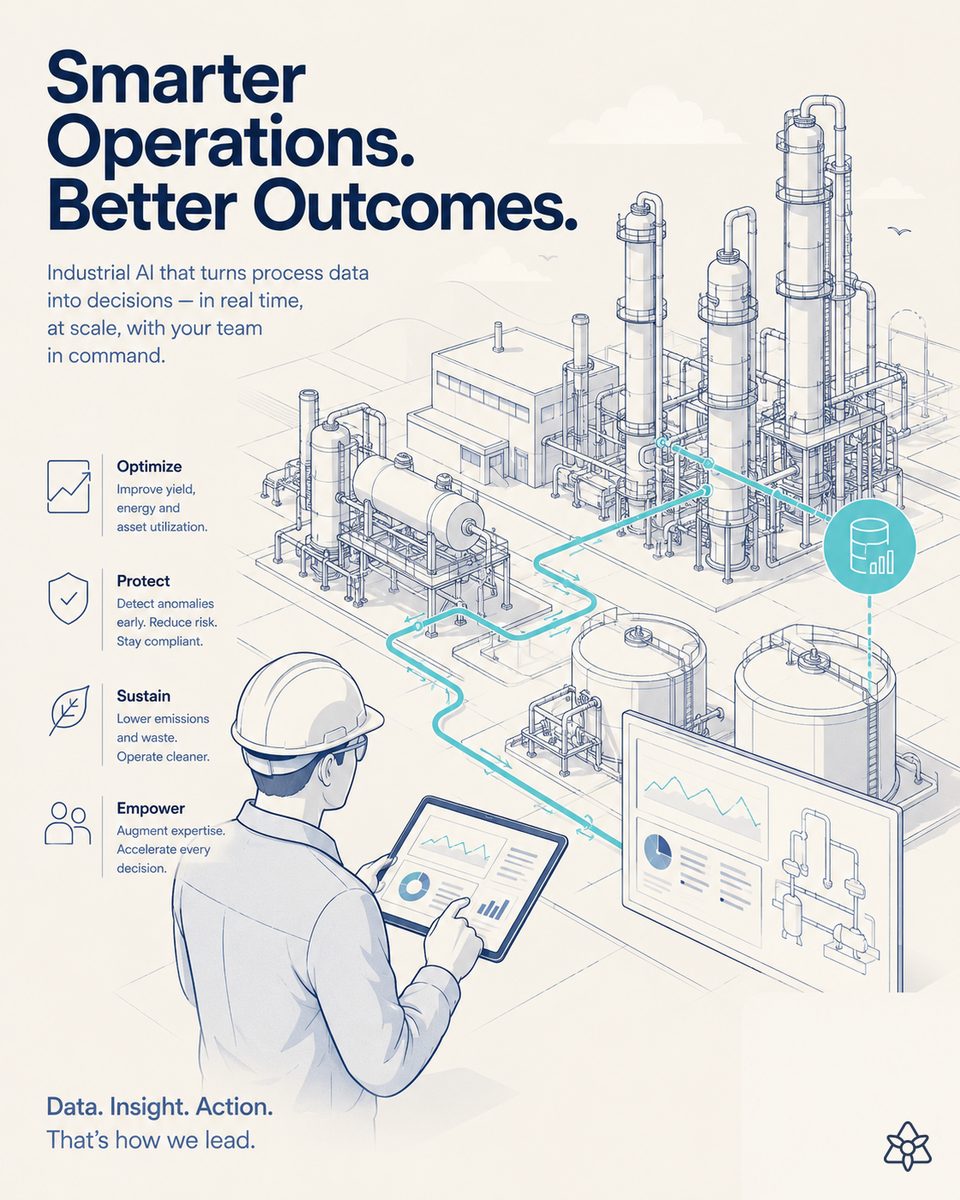
The coater defect is not just what you see — it's what changed upstream.
A barrier coater — silicone for release, PVDC for food, others for secondary uses — lives inside a narrow window. One anilox cell plugged by a speck of adhesive, a viscosity one point off, a speck of dust on the blade: it all translates into comets, craters or uncoated areas on the film. And it all shows up on the roll when a thousand meters are already wound on top — or, worse, when the customer finds it and returns the roll for a barrier defect.
Classic control is a pair of eyes at the console and a strobe lamp. It works 99% of the time, but the 1% is the roll sold as second grade, the batch that gets reworked, or the return from the converter. And when someone wants to understand why it happened, there is no record of which anilox was mounted, the bath's actual viscosity at that instant, the machine speed and the blade setup. Every defect gets debated as if it were new.
The problem isn't eyesight — it's memory and cross-checking. That has just changed.
iLEAN Vision doesn't bolt a quality check on top — it gives the coater sight and memory.
Visual defect detection and process context live in two different places today. iLEAN Vision is the putty that seals that crack: the in-line camera is not an isolated alarm — it is connected to the MES, the anilox, the viscosity and the history, so the defect is understood in its context. The person decides what to do with the roll and with the line.
Vision sees every meter of film. Connect captures anilox, viscosity and recipe. The agent cross-checks the visual pattern against the process — and says what changed.
The iLEAN pieces applied to the barrier coater:
- Vision — a vision-equipped terminal (CNN) over the coater's exit zone. It detects comets, craters and uncoated areas, classifies them by type and georeferences them on the roll (cross-web position, meters from the start). It flags the roll in the MES with the defect map so the rewinder operator doesn't have to guess. It works without a network: if the plant loses WiFi, it keeps detecting and marking.
- Connect — captures the anilox counter, the bath viscosity (manual, intermediate or integrated, depending on what your equipment has), the machine speed and the COA from the film/silicone/PVDC supplier. What used to live on five islands becomes a single view.
- Agents — cross-check the visual pattern against the context and build the per-roll dossier. If comets recur after an anilox change, they say so. If craters coincide with a new batch of film, they say that too. The root cause appears on screen — and the quality manager validates it with one click.
Classic visual control vs. cross-checked vision with iLEAN Vision
| Aspect | Classic control | With iLEAN Vision |
|---|---|---|
| Defect detection | Operator's eye + strobe lamp | In-line CNN by defect type, full web width |
| Position on the roll | Approximate, discovered at rewinding | Exact meters + cross-web position in the MES |
| Cross-check with anilox and viscosity | By hand, after the defect | Automatic, in the moment — proposes the cause |
| Defect recurrence | Debated each time as if it were new | Recognized pattern, suggestion backed by history |
| Operation without a network | n/a | Keeps detecting and marking on the panel's own power |
| Roll traceability | Partial map, rebuilt after the problem | Complete per-roll dossier, with a photo of the defect |
Impact estimate for your plant — to be validated with your numbers.
The block below is an estimate to be validated with the specific data of your plant. We put it forward so the committee has an order of magnitude; we refine it during the diagnostic.
- Plant with a multi-substrate coater (BOPP, PET) and silicone release or PVDC chemistry, with documented comet/crater incidents and at least one converter return in recent years.
- Vision pilot on one line (in-line camera + anilox and viscosity integration via Connect + cross-check with the MES). First value expected within a few weeks: the first recurring defect shows up with its root cause on screen.
- Indicative payback between 4 and 9 months, depending on how often rolls are downgraded to second grade and the cost of a converter return. Expected roll scrap reduction ≥ 30% on the worst quartile.
- The hard lever is one avoided return: the converter who keeps the contract when they see a root cause and a plan, not just "this shouldn't happen again".
And the quality manager's reasonable doubt
"What if the AI makes up the cause of the defect?" — hallucination is a problem of free generation, not of anchored tasks. Here the AI invents nothing: it recognizes a visual pattern (trained on your defects) and cross-checks it against measured data (anilox, viscosity, speed). In tasks like these, the best models brought error below 1.5% [1]. And the decision on the roll and the line is signed by the person — the system brings them the material.
[1] OpenAI paper "Why Language Models Hallucinate", 2025 — on the reliability of AI in anchored tasks.
What people ask about defects on silicone/PVDC barrier coaters
Which typical silicone/PVDC barrier coater defects does iLEAN Vision detect?
The three coating classics: comets (longitudinal streaks from a clogged anilox cell or a particle on the blade), craters (uncoated spots caused by dewetting or surface tension on the substrate), and larger-scale uncoated areas (an air bubble, an anilox skip, a reservoir running dry). Vision tags every defect with its type, cross-web position and length, and exports the map to the MES so the rewinder operator knows exactly where the suspect zone of the roll is.
Why cross-check the image against anilox and viscosity instead of just detecting the defect?
Because the alarm alone does not save the shift — what you need is to know what to change so the defect does not come back. Vision cross-checks the visual pattern against the bath's recent viscosity, the anilox reading (theoretical volume, usage counter), machine speed, the substrate's surface tension and the blade setup. If comets appear whenever speed climbs past a certain zone, the agent says so; if craters coincide with a change of film supplier, it says that too. Root cause, not just an alarm.
Does it work with silicone barrier coating (release liner) and food-grade PVDC?
Yes. They are two different chemistries with three similar processes (gravure, multiroll, slot die). Vision keeps one defect model per family (silicone release on BOPP/PET, PVDC on BOPP/PET, others such as acrylic and PVOH if you use them) because the defect's visual signature changes with thickness and transparency. For silicone release it also detects the discontinuity in the aging curve, training on samples from your own lab, not a generic set.
What does Vision do when it sees the defect — does it stop the line?
No. Vision flags the defect in the MES (exact position on the roll), alerts the coater operator through the Connect app or the earpiece, and proposes three actions depending on the pattern: stop and clean the blade, adjust viscosity or tension, or keep running and mark the roll as fit for secondary uses only. The shift lead makes the call. Vision works without a network: if the plant loses WiFi, it keeps detecting and marking the roll, because what is critical cannot depend on WiFi.
How is it trained with few defect samples?
The rare defect is the expensive one — and there are usually few photos of it. Vision starts from a base coater model and is fine-tuned with the set that accumulates in the plant. Connect captures every detected defect with its photo and its context signals, and the quality manager validates or relabels on a screen. Every human validation reinforces the model. Within a few weeks the system covers the typical defect catalog of your specific coater; the rare ones sharpen up as it lives alongside the shift.
More cases in petrochemical
- A gelled compounding batch is not an operator error — it is a correlation nobody had in front of them in time.iLEAN Edge correlates torque, pressure and online MFI in reactive extrusion of antioxidants and acid…
- SHE traceability of MDI in PU sealant — the isocyanate data cannot arrive after the valve is open.iLEAN Connect captures MDI/TDI delivery notes, cross-checks them with stock and formula and flags SHE…
- You want AI in the pyrophoric catalyst plant — without compromising the SIL or opening the OT to the outside.iLEAN's three rings uphold the SIS and human validation in pyrophoric catalyst activation and unloading,…
- You change UV inkjet ink every shift — and the changeover eats the next customer's hour.iLEAN Connect orchestrates the fast changeover of UV inkjet ink: recipe, purge, printhead and QA in a…
- UV adhesive in flexible lamination — delamination doesn't show up today, it shows up at your customer's plant.iLEAN Edge correlates UV adhesive viscosity, coat weight and UV dose in film-film lamination: stops…
- FCC zeolite catalyst — today's makeup rate is decided with an analysis from three days ago.How iLEAN cross-references E-cat, feed metals and FCC yields to anticipate the fresh-to-equilibrium…
Tell us your case and in 48h we'll send you the estimated ROI of this AI project for your barrier coater.
We work on your line's real data, not ours. Diagnostic with no commitment.
Request estimated ROI in 48h See specialty chemicals