Low-migration food ink in rotogravure — one photoinitiator that slipped into SVHC is a recall.
REACH/CLP, EuPIA and Swiss compliance for a low-migration ink lives in lab spreadsheets, supplier SDS in network folders and per-SKU rules inside the technical department's head. iLEAN Brain keeps the matrix live, blocks non-compliant formulas before they reach the weighing room and builds the low-migration dossier per batch. The person in the technical department signs.
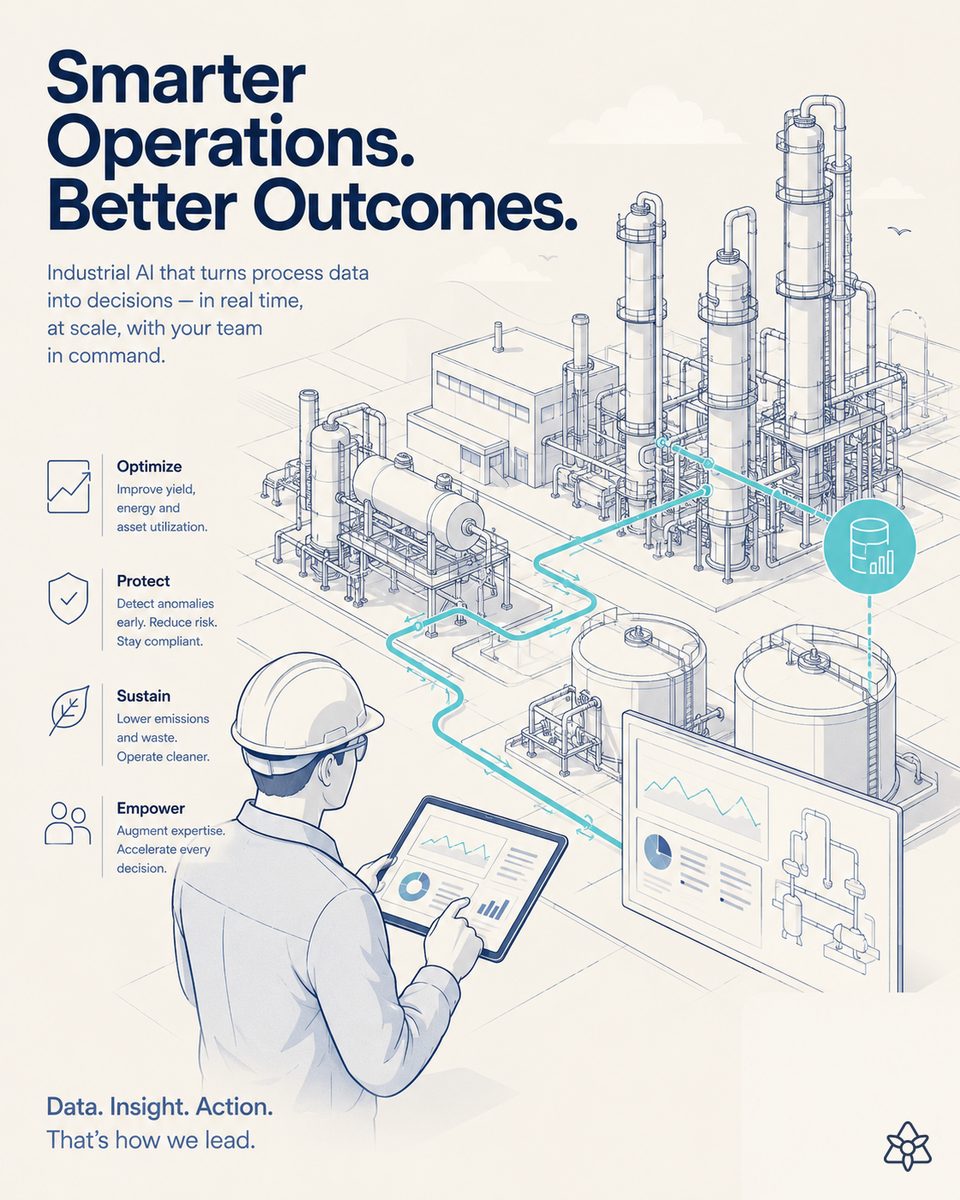
Three regulatory truths living on three islands.
A correct low-migration ink is the intersection of three pieces of data that, in most plants, each live on their own:
- Which destination markets the SKU covers — EU, Switzerland, USA, UK. It sits in the ERP, in the customer field, and it almost never reaches the formulation lab in that form.
- What the current recipe says — which pigments, which resins, which photoinitiators, which additives. The recipe lives in an Excel sheet owned by the formulation lead, with a version history that gets overwritten at the pace of the changes.
- What the live lists say — REACH SVHC, REACH Annex XVII, CLP, EuPIA exclusion list, Swiss Ordinance A/B. These lists move without telling the plant. A photoinitiator that was free yesterday enters SVHC today.
The technical department knows all this, but it cannot be in three places at once. The supplier reformulates a pigment, sends the new SDS by email, someone files it — and the production recipe takes months to update, if it ever does. The classic system works 99% of the time. That 1% is the one that ends up as a complaint from the packer — and every complaint means product pulled from the shelf, a destroyed batch, brand damage.
iLEAN Brain does not replace the ERP or the lab notebook — it seals the cracks between the two.
The low-migration problem is not a lack of information: it is information living on islands and moving out of sync. SVHC is updated twice a year. Suppliers reformulate when it suits them. And the packer demands the low-migration dossier per batch, not per year. iLEAN acts as the putty covering the dead zones between the ERP, the formulation lab and the live regulatory lists, without asking you to change your ERP or redo your lab notebook.
Brain keeps the REACH/CLP, EuPIA and Swiss matrix live per SKU. Connect captures new SDS at second zero. The agent cross-references, blocks and builds the dossier. The person in the technical department signs — never the other way round.
The iLEAN pieces applied to low-migration food ink in rotogravure:
- Connect — captures supplier SDS by email/WhatsApp/portal at second zero. It also captures updates to SVHC, to EuPIA and to the Swiss Ordinance from their official channels. And it captures the effective recipe weighed in the room — the truth of what actually went into the batch, not the theoretical version.
- Brain (Agents + Central) — keeps the matrix live per SKU: which destination markets it covers, which lists apply, which substances are in force, which SDS carry the current version. When the lab loads a new recipe for production, the agent cross-references it against the matrix and, if something does not add up, holds the recipe before it reaches the weighing room. It also builds the low-migration dossier per batch: effective recipe, current SDS, EuPIA/Swiss/REACH declarations, batch test results, OCR photo of the printed reel.
- Edge — optional, on the rotogravure line: OCR of the reel traceability plus visual reading of the ink drum status, so the printed batch data also enters the dossier automatically.
Manual compliance vs. a live matrix with iLEAN
| Aspect | Excel sheets + SDS in a folder | With iLEAN Brain + Connect + Edge |
|---|---|---|
| SVHC update | Manual, weekly, if someone remembers | Captured by Connect on publication day |
| Reformulated supplier SDS | Email filed away, no automatic cross-check | Cross-referenced with every SKU using the component |
| Recipe non-compliant for a destination market | Detected when the customer complains | Held before it reaches the weighing room |
| Low-migration dossier per batch | Rebuilt by hand, weeks | Automatic per batch, ready for the IFS PACsecure auditor |
| Printed reel traceability | The production lead's sheet | Edge OCR + MES integration |
| Substance added to SVHC between versions | Discovered at the next routine test | Immediate alert + hold on the affected SKUs |
Impact estimate for your plant — to be validated with your numbers.
The block below is an estimate to be validated with the specific data of your plant. We put it forward so the committee has an order of magnitude; we refine it during the diagnostic.
- Maker of inks for flexible food packaging, rotogravure + UV/LED flexo, a portfolio of several hundred SKUs spread across the EU, Switzerland, the UK and export, several pigment and photoinitiator suppliers.
- iLEAN Brain deployment with a REACH/CLP/EuPIA/Swiss matrix per SKU + Connect for SDS and live lists + automatic dossier per batch. First value expected within a few weeks: matrix loaded and the first automatic holds on non-compliant recipes.
- Indicative payback between 4 and 9 months, depending on the historical frequency of supplier reformulations, the number of SKUs affected by SVHC changes and the average cost of a dossier rebuilt by hand for an audit.
- Expected reduction in technical department time spent building dossiers ≥ 30%, recoverable as capacity for new formulation and green reformulation.
- The hard lever is a single non-compliant recipe held in time: batch not destroyed, packer not complaining, brand not damaged.
And the technical lead's reasonable doubt
“What if the AI misreads a regulatory list and blocks a recipe that does comply?” — hallucination is a problem of free generation, not of anchored tasks. In tasks where the AI merely compares a recipe against a published list (cross-referencing CAS numbers against SVHC, against the EuPIA exclusion list, against the Swiss Ordinance), the best models brought error below 1.5% [1]. And even so, what is critical is never decided alone: iLEAN holds and the person signs the release. The three safety rings exist precisely for this.
[1] OpenAI paper “Why Language Models Hallucinate”, 2025 — on the reliability of AI in anchored tasks.
What people ask about REACH/CLP/EuPIA low-migration food ink
Which regulations cover a low-migration ink for food packaging in Europe?
In the EU several layers coexist: Regulation (EC) 1935/2004 (food contact materials), Regulation (EU) 10/2011 (plastics) with its specific migration limits, the REACH Regulation (EC) 1907/2006 for chemical substances, the CLP Regulation (EC) 1272/2008 for classification and labeling, the EuPIA guideline on printing inks for food contact materials, and the Swiss Ordinance (817.023.21) with its positive list of permitted substances. Each customer SKU may fall into a different combination — and the matrix moves every time a supplier reformulates a pigment or a photoinitiator.
Why does a non-compliant formula slip into production even with a quality system in place?
Because the regulatory truth about the SKU lives in three separate places that never talk to each other: the ERP holds the customer and the destination market (EU, Switzerland, USA), the formulation lab holds the recipe in a spreadsheet, and the technical department holds the supplier SDS in a network folder. The operator in the weighing room reads the recipe as a list of weights — they never see the REACH exclusion list or the Swiss positive list. When a photoinitiator gets added to SVHC between two versions of the recipe, nobody closes the loop until the customer complains.
How does iLEAN block a formula that no longer complies with REACH/CLP, EuPIA or Swiss rules?
An iLEAN agent keeps a live matrix: for every SKU, which destination markets it covers and which lists apply (REACH SVHC, REACH Annex XVII, CLP, EuPIA exclusion list, Swiss Ordinance list A/B). When the lab loads a recipe for production, the agent cross-references it against the matrix and against the most recent SDS that Connect has captured from the supplier's email. If a substance has entered SVHC, or if an IAS/NIAS exceeds the declared threshold for that food simulant, the recipe never reaches the weighing room — the system holds it and alerts the technical lead. The person validates and signs; the batch is not released on its own.
Who builds the low-migration dossier per batch for the auditor or the packer?
Today someone in the technical department builds it — by hand, weeks later, cross-referencing spreadsheets. With iLEAN, an agent generates the dossier per batch automatically: the effective recipe weighed in the room, current SDS for every component, the EuPIA/Swiss/REACH declaration of compliance, the overall and specific migration test results for the batch, and traceability of the final print with OCR of the reel. The dossier is signed electronically and delivered to the packer or to the IFS PACsecure auditor as a PDF/A with every annex attached. The person in the technical department reviews and signs — they do not fill in boxes.
What happens if a supplier reformulates a pigment or a photoinitiator between two batches?
That is exactly the case that is hardest to catch by hand. Connect captures the supplier's new SDS at second zero — from the email, from the distributor's portal, even from a WhatsApp sent by the sales rep. The agent compares the new version against the previous one, identifies which substances changed, cross-references every SKU that uses that component and fires two alerts: one to the formulation lab (review) and one to production (hold the affected SKUs until validation). Nothing is released until the person in the technical department signs.
More cases in petrochemical
- Pigment dispersion in a bead mill — "a little longer" gets paid for in kWh, beads and rejected batches.iLEAN Edge cross-checks the digital grindometer, viscosity and the bead mill's specific energy to…
- Qualicoat powder coating on aluminum profiles — a cured lump is a 7-meter bar sent to rework.iLEAN Edge spots lumps and powder thickness before the oven on Qualicoat architectural profiles — the…
- The edge band peels off three weeks later — and the complaint arrives when the furniture is already in the customer's home.iLEAN Edge crosses melter temperature, humidity and edgebander speed to hold PUR open time and prevent…
- A gelled compounding batch is not an operator error — it is a correlation nobody had in front of them in time.iLEAN Edge correlates torque, pressure and online MFI in reactive extrusion of antioxidants and acid…
- SHE traceability of MDI in PU sealant — the isocyanate data cannot arrive after the valve is open.iLEAN Connect captures MDI/TDI delivery notes, cross-checks them with stock and formula and flags SHE…
- You want AI in the pyrophoric catalyst plant — without compromising the SIL or opening the OT to the outside.iLEAN's three rings uphold the SIS and human validation in pyrophoric catalyst activation and unloading,…
Tell us your case and in 48h we'll send you the estimated ROI of this AI project for your food ink plant.
We work on the real data of your SKU portfolio, not ours. Diagnostic with no commitment.
Request estimated ROI in 48h See specialty chemicals