Between the wire break and the biocide overdose — dosing a paper circuit needs one head with every signal in front of it.
Biocide in a pulp and paper circuit gets adjusted blind when the operator does not have ATP, redox and microbial load on the same screen. Overdosing is paid for in effluent and chemical; underdosing is paid for in biofilm, wire breaks and hours of machine downtime. iLEAN Connect integrates those signals, anticipates the risk and proposes the adjustment — the person signs. Without a signature, the pump does not change.
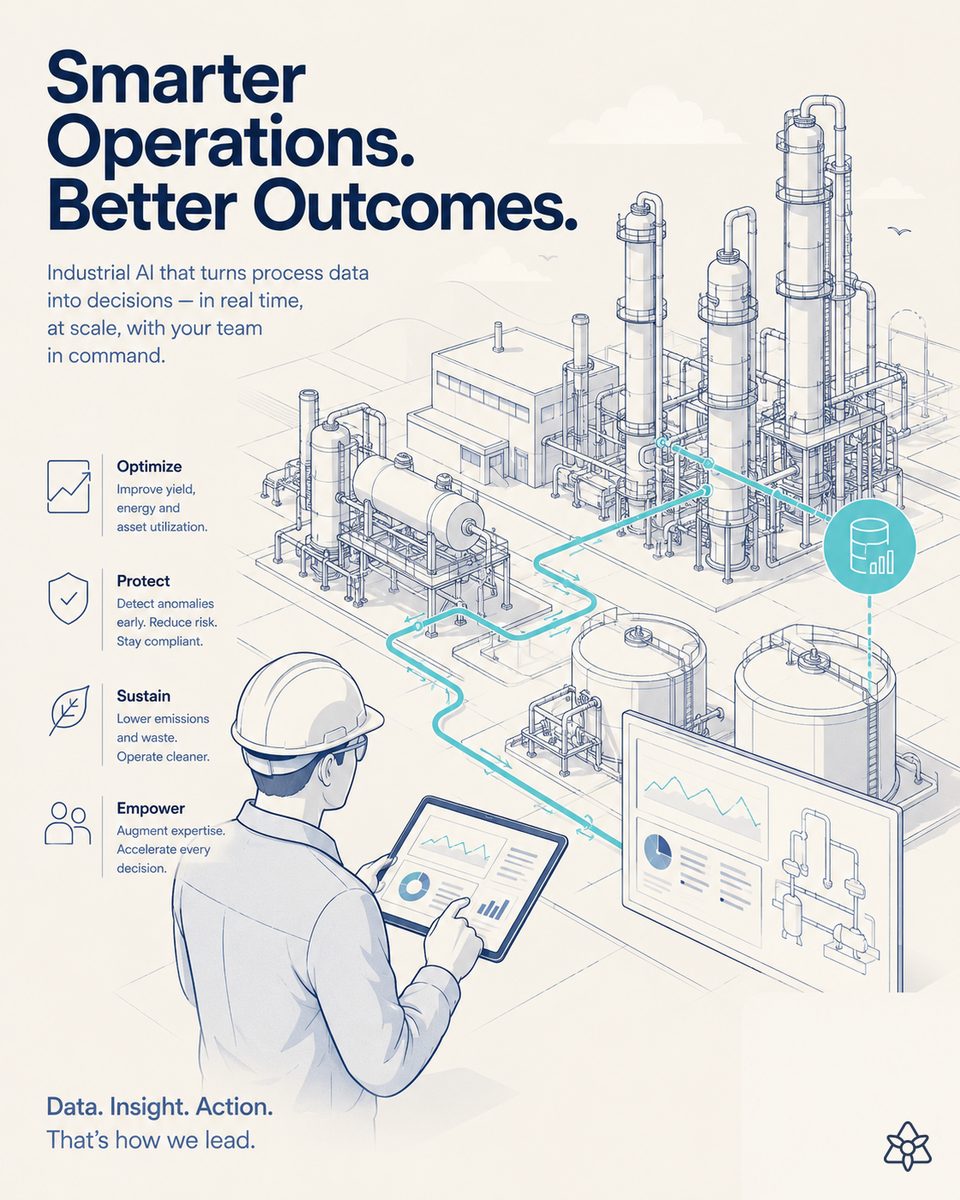
Microbial load is not stable — but biocide dosing is adjusted as if it were.
A pulp and paper circuit is hot water with starch and fiber: the perfect culture medium. The wire breaks when biofilm grows without anyone seeing it in time. Biocide is the chemical that keeps the circuit alive and clean — but the question of how much and when is hard, because the answer changes with the recovered fiber mix, the temperature, the downtime and the alternating oxidizing/non-oxidizing program.
The operator adjusts the pump with the information he has: the last lab analysis (from a shift ago), the redox reading on the panel (on another screen), the dosing calendar (on paper). If in doubt, he boosts — better an overdose than a break. And that is how a mill ends up explaining to the competent authority why its effluent COD went up that month, and explaining to finance why biocide consumption is up 15% for no clear reason.
The root cause is not discipline: it is that the circuit's signals live in different systems, and the decision is made with a different subset each time. That has just changed.
iLEAN Connect does not add another system — it seals the cracks between the five you already have.
Biocide control in the circuit is not a problem of missing data: it is data on five islands (DCS, LIMS, lab, the chemical services manager's spreadsheets, the dosing calendar) that do not meet at the moment of decision. iLEAN Connect acts as the putty that fills that gap without asking you to change anything. Connect carries, the agents decide, the person signs.
Connect captures ATP, redox, microbial count and the dosing program. The agent anticipates biofilm before it appears and proposes the adjustment. The person signs — without a signature, the pump does not move.
The iLEAN pieces applied to biocide in the circuit:
- Connect — the putty. It captures inline ATP, redox, conductivity and temperature from the DCS; reads microbial count from the LIMS; brings the dosing calendar into the system at second zero; and captures the pump's analog gauge by photo if it is not integrated. It puts heterogeneous signals on one plane.
- Agents — they build the history of each circuit and cross the signals against the record of wire breaks and out-of-limit discharges. They anticipate biofilm growth and propose adjusting the dose or not dosing when the alternating program allows it. They build the per-shift file with everything that happened.
- The three rings — the biocide dosing pump lives in the OT ring (critical). The agent's proposal arrives as a signed envelope in the hardened mailbox; it only becomes an effective change when the person signs it. A plant with lower criticality can operate with threshold-conditioned auto-approval; a high-risk plant operates with a mandatory human signature. You configure it, with no code to touch.
Reactive dosing vs. cross-referenced dosing with iLEAN Connect
| Aspect | Classic control | With iLEAN Connect |
|---|---|---|
| Source of the decision | Lab + redox + calendar, on separate screens | ATP, redox, count and program, in a single view |
| Reaction time | Hours — after the discrete lab analysis | Minutes — with the continuous circuit signal |
| Alternating oxidizing/non-oxidizing program | Calendar on paper, boosts out of habit | Calendar cross-referenced with the real microbial signature |
| Effluent (COD / AOX) | Reactive, out of limits once it builds up | Early margin before drifting out of band |
| Biocide consumption per ton | Goes up whenever there is doubt — "better too much" | Only when the microbial signature justifies it |
| BPR / effluent file | Rebuilt from sheets and memory | Auto-built per shift, with the signals behind it |
Impact estimate for your plant — to be validated with your numbers.
The block below is an estimate to be validated with the specific data of your plant. We put it forward so the committee has an order of magnitude; we refine it during the diagnostic.
- Paper mill with a high share of recovered fiber, one or two documented wire breaks in recent years, alternating oxidizing/non-oxidizing biocide, effluent with demanding COD/AOX limits.
- Connect pilot on one circuit (integrating inline ATP + redox + microbial count + calendar + DCS). First value expected within a few weeks: the next rise in microbial load is detected before the wire is affected.
- Indicative payback between 4 and 9 months, depending on break frequency, machine-hour cost and current biocide consumption. Expected reduction in biocide consumption per ton ≥ 30% over the worst quartile of shifts, without losing the safety margin.
- The hard lever is one wire break avoided: machine hours, the fabric itself and possibly off-spec product. A single break pays for the pilot.
And the chemical services manager's reasonable doubt
“What if the AI proposes the wrong dose?” — hallucination is a problem of free generation, not of anchored tasks. Here the AI does not decide on its own: it crosses measured signals, anticipates the microbial curve and proposes an adjustment with the rationale in front of you. In tasks like these, the best models brought error below 1.5% [1]. And the decision on the pump is signed by the person — the OT ring only accepts what is signed.
[1] OpenAI paper “Why Language Models Hallucinate”, 2025 — on the reliability of AI in anchored tasks.
What people ask about biocide in the pulp and paper circuit
Why is biocide in the paper circuit such a hard case to tune?
Because the circuit lives between two expensive extremes: if you overdose, you pay for extra chemical and put your effluent at risk (COD/AOX limits); if you underdose, biofilm in the pulper, the machine and the reel breaks the wire and stops the machine for hours. Microbial load is not stable — it moves with the recovered fiber mix, water temperature, downtime, and the introduction of starch or mineral fillers. The operator adjusts the pump with the information he has, which is almost never the whole circuit at once.
Which circuit signals does iLEAN Connect cross to propose the adjustment?
Three families: continuous circuit measurements (inline ATP, redox, conductivity, temperature), discrete lab analysis (microbial count, hardness, residual starch, effluent COD) and the operating context (current recovered fiber mix, stoppages, historical biocide and starch dosing). Connect ingests what is already measured — the novelty is that it used to live in five different systems. The agent cross-references those three families against the history of wire breaks and out-of-limit discharges.
Does the AI decide the biocide dose on its own?
No. Industrial biocide dosing is a critical operation — it belongs to the OT ring, where only signed instructions get through. The agent proposes the adjustment with the rationale on screen (which signal triggered it, what biofilm horizon is anticipated, what impact the suggested dose would have on the effluent) and the chemical services manager signs. Without a signature, the pump does not change. What the system does do automatically is alert early, before microbial load enters the risk zone, giving the person room to act.
How does iLEAN prevent overdosing with an alternating oxidizing biocide program?
An alternating biocide program (oxidizing and non-oxidizing) has its own anti-resistance logic, but overdosing shows up when two channels overlap, or when redox drops and the operator boosts out of habit. Connect looks at the dosing calendar against live redox and ATP, and proposes not dosing when the microbial signature does not justify it, recording the reason for audit. The year's kg/t of biocide comes down without touching the biocide itself — simply by dosing only when it is needed.
What about Biocidal Products Regulation (BPR) compliance and the effluent?
Connect builds the automatic file per shift — what was dosed, when, on which supporting signal, which human signature validated it. That becomes raw material for the report to the competent authority and for the environmental manager's internal audit. Compliant dosing leaves a trace; reactive “just in case” dosing goes down, and with it the risk of out-of-limit AOX/COD in the effluent discharge.
More cases in petrochemical
- Specialty chemicals — the golden batch exists; the problem is repeating it.Documented iLEAN cases in specialty chemicals: golden batch, cross-contamination, REACH/CLP and color…
- 2K dosing of MS polymer sealant — a badly measured ratio is a pallet of cartridges to destroy.How iLEAN Edge sees the base-to-catalyst ratio on a 2K MS polymer sealant dosing unit and stops the line…
- Acrylic latex emulsion polymerization — two batches from the same reactor do not land the same way on the golden batch.How iLEAN Edge corrects the exotherm profile and monomer feed in an acrylic latex reactor to hit the…
- A shade complaint should not take weeks — the bag, the injection machine and the part have to talk.iLEAN Tracer links the masterbatch batch to the bag, the injection machine parameters and the customer's…
- ΔE color control on multi-customer flexo ink — start-up cannot keep being the scrap of the day.iLEAN Vision measures ΔE inline on flexo ink, adjusts dosing and stores a signed per-customer recipe —…
- SDS, GHS label and Ecolabel dossier per SKU and format — without rewriting them by hand for every can.iLEAN Writer generates the SDS, GHS label and EU Ecolabel dossier for every SKU and pack format straight…
Tell us your case and in 48h we'll send you the estimated ROI of this AI project for your paper mill.
We work on your circuit's real data, not ours. Diagnostic with no commitment.
Request estimated ROI in 48h See specialty chemicals