Acrylic latex emulsion polymerization — two batches from the same reactor do not land the same way on the golden batch.
The Tg, the particle size and the coagulum of an acrylic latex are decided in the dance between the reactor's exotherm curve and the monomer feed curve — and small drifts (jacket water, wall fouling, initiator efficiency) are enough to push the batch out of range. iLEAN Edge learns the golden batch signature and anticipates the feed correction before the drift turns into an out-of-spec result. The control room signs — the monomer pump drive is never touched on its own.
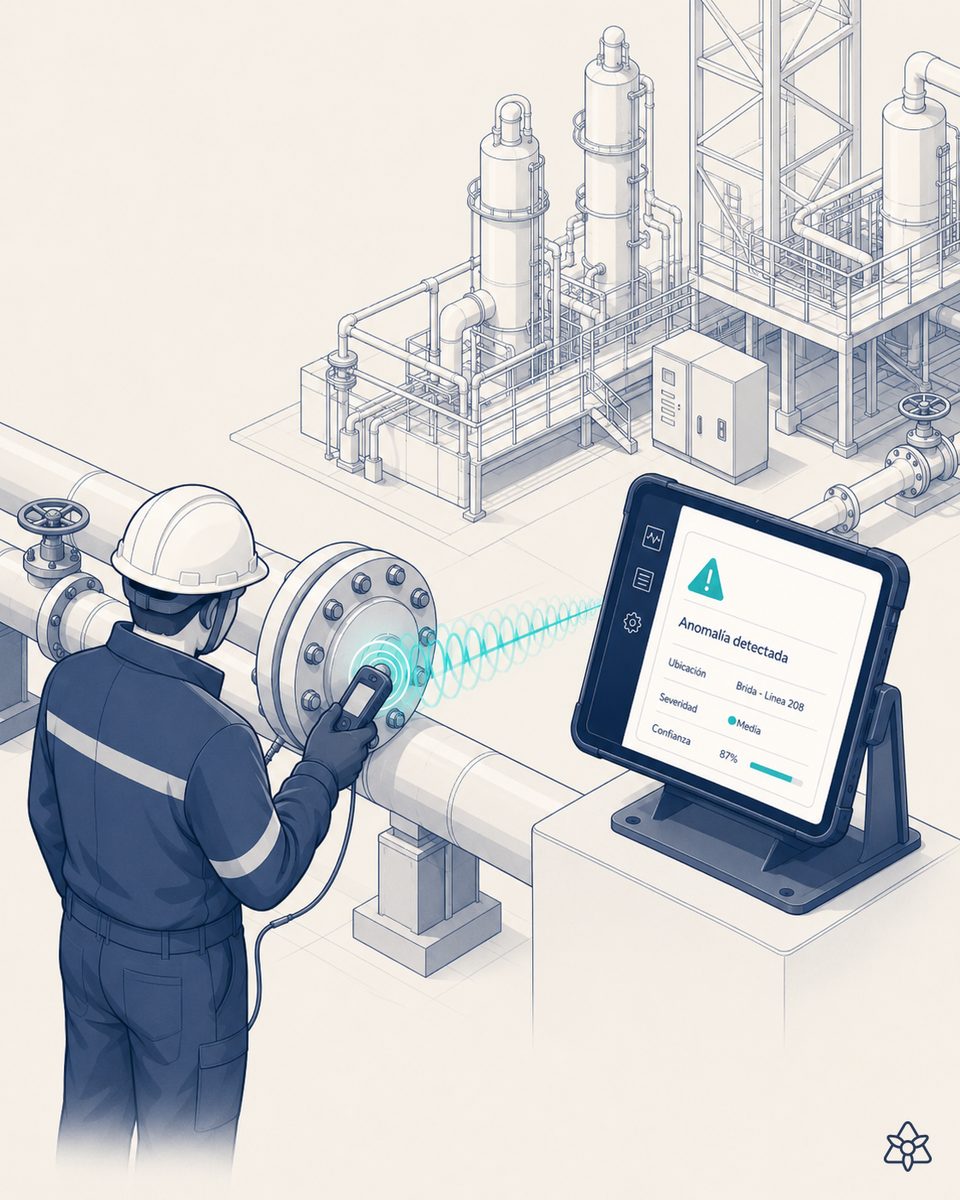
The same reactor, the same recipe, two batches that do not land the same.
An acrylic latex emulsion polymerization reactor looks like a closed-recipe process — solids, monomers, initiator, surfactant, feed profile, temperature profile. In most plants, the reality is different: two batches of the same grade rarely land exactly on the golden batch. The reason lives in small drifts that no system cross-references:
- Jacket water temperature — the air cooler does not deliver the same approach at 4 in the morning as at 4 in the afternoon on a hot day.
- Reactor wall fouling — today's wall does not transfer heat the way it did six months ago. The exotherm signature of the same batch changes as the reactor ages.
- Initiator lot — it arrives within spec, but with an efficiency that is not exactly the same as the previous lot.
- A short monomer pump stoppage — three minutes with no feed, a micro-accumulation the exotherm curve registers minutes later.
The board operator knows this, but he is tracking several parameters at once and cannot recompute the feed correction in real time with all the variables in play. The result is an off-Tg batch, a particle distribution that does not hit the mark, or in the worst case coagulum — rework (when possible), a reactor down for cleaning, a customer lot that does not ship.
iLEAN Edge does not open the reactor — it seals the crack between the nominal recipe and the real batch.
The golden batch problem is not a missing recipe: it is the difference between the nominal recipe and the reactor you have today. The DCS follows the nominal curve. The lab measures at the end. And the board operator corrects by feel when he sees the exotherm move. iLEAN acts as the putty that covers the dead zone between the recipe and the reality of the reactor — without asking you to change the DCS, the recipe or the reactor.
Edge learns the golden batch signature. Connect captures the lab and DCS data. The agent proposes the feed correction in real time. The board operator signs — never the other way round.
The iLEAN pieces applied to acrylic latex emulsion polymerization:
- Edge — mounts on top of the existing instrumentation (mass and jacket thermocouples, pressure, monomer and initiator flow meters) and adds two readings the DCS does not cross-reference: an accelerometer on the agitator (a vibration signature that changes with the viscosity of the medium and with fouling) and, when the reactor has a sight glass, machine vision on the mass to detect pre-coagulum. It learns the golden batch signature and compares it against every new batch. It works with no network.
- Connect — captures the batch's lab results (solids, Tg measured by DSC, particle size by DLS, Brookfield viscosity) — from the LIMS if there is one, from the lab spreadsheet if there is not, from a photo of the paper chart recorder if the reactor is very old. The capture gradient adapts to whatever reactor you have.
- Agent — crosses the live exotherm signature with the real jacket temperature, the vibration signature, the inferred fouling and the initiator lot, and proposes the monomer feed correction to the board operator (reduce X% for Y min, hold the initiator ramp, and so on) before the drift turns into an out-of-spec result. The board operator validates and signs; the drive is never touched on its own. When the batch lands on the golden batch, the nominal recipe is refined with the reality of that reactor.
Polymerization by nominal recipe vs. the golden batch with iLEAN
| Aspect | Nominal recipe + the board operator's instinct | With iLEAN Edge + Connect + Agent |
|---|---|---|
| Monomer feed curve | Fixed by recipe | Corrected in real time against the golden batch signature |
| Pre-coagulum detection | Once you can already see it floating | From the agitator's vibration signature + sight glass |
| Jacket temperature variation | Accepted | Compensated by the proposed feed adjustment |
| Batch-to-batch difference | Validated at the end by the lab | The same batch every time — golden batch as a live target |
| An aging reactor (fouling) | The recipe goes stale without anyone noticing | Continuous refinement of the signature |
| Traceability for customer / audit | Rebuilt by hand | Per-batch dossier with every curve and correction |
Impact estimate for your plant — to be validated with your numbers.
The block below is an estimate to be validated with the specific data of your plant. We put it forward so the committee has an order of magnitude; we refine it during the diagnostic.
- Acrylic latex plant, 10-15 m³ reactor (semi-batch with monomer feed), a portfolio of several grades (adhesives, paints, coatings), a mid-generation DCS.
- Edge pilot on the existing instrumentation + an accelerometer on the agitator + (optional) sight-glass vision + integration with the LIMS or the lab spreadsheet. First value expected within a few weeks: the golden batch signature learned and the first feed correction proposals.
- Indicative payback between 4 and 9 months, depending on the historical frequency of off-Tg or coagulum batches and the cost of each deviated batch (rework, destruction, reactor downtime).
- Expected reduction in out-of-range batches ≥ 30% in the first quarter, converging towards a sustained golden batch.
- The hard lever is batches that always land on the golden batch — Tg/solids/particle size consistency that the formulating customer experiences as a better supplier.
And the board operator's reasonable doubt
“What if the AI proposes the wrong feed correction and derails the batch?” — hallucination is a problem of free generation, not of anchored tasks. In tasks where the AI simply compares the current exotherm signature with the golden batch signature of the same reactor, the best models brought error below 1.5% [1]. And even so, what is critical is never decided alone: iLEAN proposes and the board operator signs the correction. The three safety rings exist precisely for this — the monomer pump drive is never touched from the outer ring.
[1] OpenAI paper “Why Language Models Hallucinate”, 2025 — on the reliability of AI in anchored tasks.
What people ask about acrylic latex emulsion polymerization and the golden batch
What defines the golden batch in acrylic latex emulsion polymerization?
The golden batch is the reference batch that lands exactly on target Tg, mean particle size and distribution, final solids and viscosity — with no coagulum, no gel and no exotherm peak outside tolerance. For an acrylic latex used in adhesives or paint, the combination of monomers (butyl acrylates, methacrylates, acrylic acid), initiator, surfactants and the monomer feed curve against the heat removal curve is what decides whether the batch lands in range or ends up a couple of degrees short. And reactors age — the wall does not foul today the way it did a year ago.
Why doesn't a batch from the same reactor and the same recipe always hit the golden batch?
Because of a collection of small drifts that no system cross-references in real time: cooling jacket temperature depends on river water or on the air cooler (it is not the same at night as during the day), the reactor wall carries more or less polymer fouling from the previous batch and that changes heat transfer, the initiator lot may arrive with slightly different efficiency, the preheated monomer may have gone through a three-minute pump stoppage. Each drift moves the exotherm curve and, if the monomer feed is not corrected in time, the batch ends up off-Tg or coagulum is born.
What does iLEAN Edge do inside the polymerization reactor?
iLEAN Edge does not open the reactor — it connects to the sensors already there (mass and jacket thermocouples, pressure, monomer and initiator flow meters) and adds two readings the DCS does not cross-reference: the agitator's vibration signature and, where the reactor allows it, machine vision through the sight glass onto the mass. With those inputs Edge learns the golden batch signature and, during a new batch, anticipates drift — if the exotherm curve starts climbing faster than the real jacket temperature would suggest, it proposes to the control room that the monomer feed be reduced by X% for Y minutes. The board operator signs — the monomer pump drive is never touched on its own.
Does it work if the reactor is old and has no modern DCS?
Yes. Connect captures data from the old PLC or from the thermocouple's paper chart recorder (a photo of the recorder, read by OCR) and pushes it into the system. Edge mounts directly at the level of the physical sensors, with no changes required to the DCS. iLEAN's capture gradient adapts to each machine — manual (photo), intermediate (isolated old PLC) or integrated (modern DCS). It does not force you to replace the reactor before you can start working towards the golden batch.
What return does an Edge pilot on emulsion polymerization deliver?
In a mid-sized plant's acrylic latex reactor, an off-Tg batch or one with coagulum means rework (when possible) or destruction, plus a reactor tied up during cleaning. The pilot covers the additional instrumentation, learning the golden batch and integration with the existing PLC/DCS, plus operator training. The hard lever is batches that always land on the golden batch — fewer out-of-range results, an end to recurring coagulum and consistent Tg/solids. We ask for your data and send you the estimated ROI in 48h.
More cases in petrochemical
- Seveso III in a chemical plant with AI — the report is not a sprint, it is living evidence.iLEAN keeps Seveso III evidence live: internal and external emergency plans and the safety report always…
- Specialty chemicals — the golden batch exists; the problem is repeating it.Documented iLEAN cases in specialty chemicals: golden batch, cross-contamination, REACH/CLP and color…
- 2K dosing of MS polymer sealant — a badly measured ratio is a pallet of cartridges to destroy.How iLEAN Edge sees the base-to-catalyst ratio on a 2K MS polymer sealant dosing unit and stops the line…
- Between the wire break and the biocide overdose — dosing a paper circuit needs one head with every signal in front of it.iLEAN Connect integrates ATP, redox and microbial load across the paper circuit and adjusts biocide…
- A shade complaint should not take weeks — the bag, the injection machine and the part have to talk.iLEAN Tracer links the masterbatch batch to the bag, the injection machine parameters and the customer's…
- ΔE color control on multi-customer flexo ink — start-up cannot keep being the scrap of the day.iLEAN Vision measures ΔE inline on flexo ink, adjusts dosing and stores a signed per-customer recipe —…
Tell us your case and in 48h we'll send you the estimated ROI of this AI project for your acrylic latex reactor.
We work on your reactor's real data, not ours. Diagnostic with no commitment.
Request estimated ROI in 48h See specialty chemicals