Lump detection in the cream emulsion with AI — see the defect before filling, not after packing 60,000 jars.
In cosmetics, a lump or phase separation in the emulsion is only discovered when the lab's physicochemical check comes in — and by then the filler has already packed the batch. iLEAN Edge watches the bulk in line before the filling head, detects the visual deviation in milliseconds and holds the batch so the person can decide whether it is recovered or discarded. The line does not restart on its own.
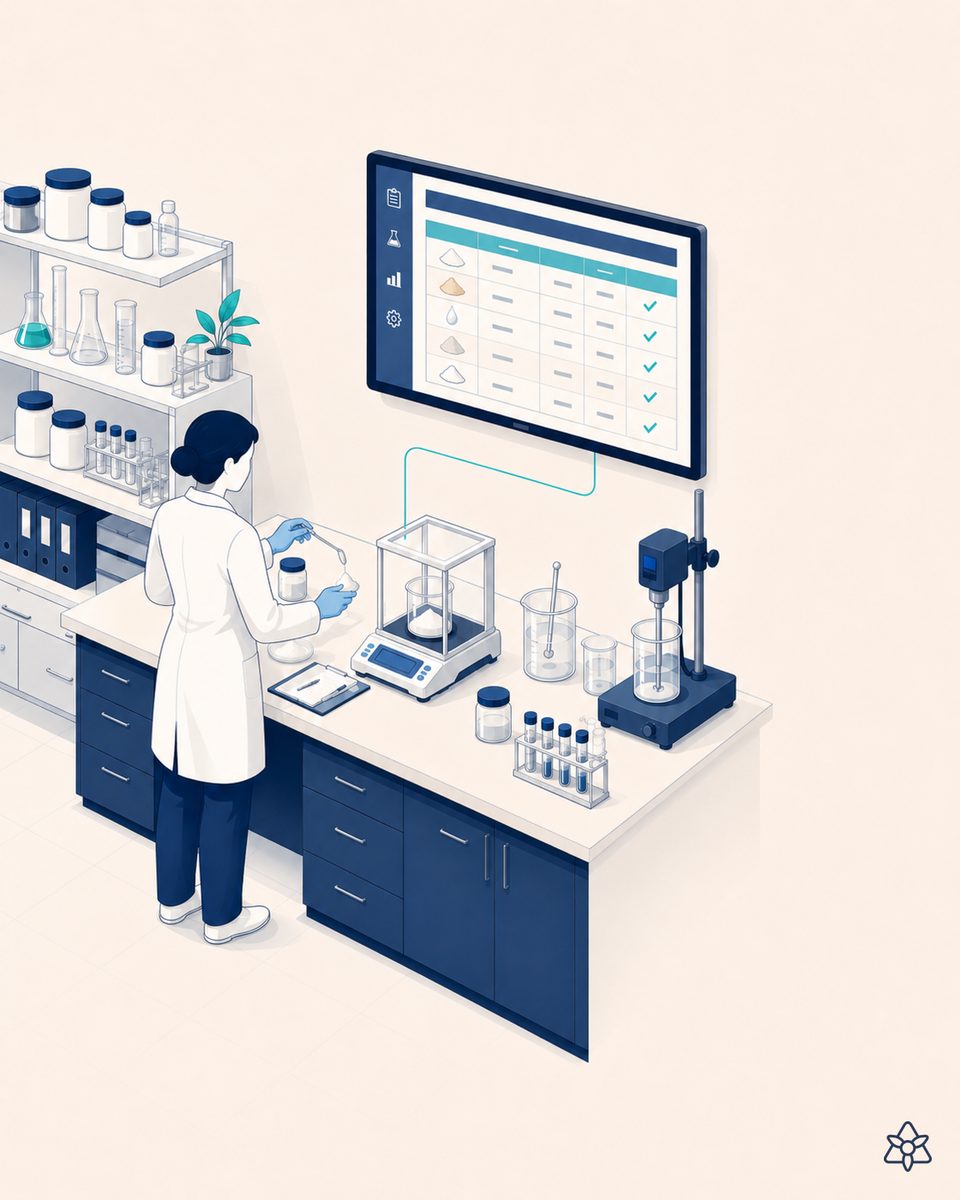
The lump shows up when it is already too late.
In a skincare plant the chain is always the same: the bulk is prepared in the reactor, passes a sample check in the lab, is transferred to the filler's buffer tank and gets packed. The quality-control bottleneck is not a missing protocol — that exists — but the fact that the truth about the batch arrives later than the batch itself.
- The lab check is by sample — and it is taken at the start. If the deviation appears as the reactor empties and the last few hundred kilos did not fully homogenize, the sample already passed the test and the reject is discovered by a customer returning the jar.
- The operator cannot see the bulk — it travels through a closed pipe. What they see is what comes out of the filler head, and by then it is already packed.
- The lump's visual signature is real — a plant technician spots it at a glance. But there is no technician watching 100% of the flow through an entire shift. It does not scale to line speed.
A single batch of anti-aging cream with peptides discarded for lumps means, in one hit: the bulk, the pre-decorated jars, the silkscreened labels, the cartons, the filler hours tied up, the rescheduling of the production plan. And the brand damage if the batch escaped to the market. The classic system works 99% of the time. That 1% is what comes back through customer service — and each one is a hard six-figure cost.
iLEAN Edge watches the bulk where the operator's eye cannot reach — the putty between the reactor and the filler.
The lump problem is not a lack of control: it is visual information that exists but that nobody is seeing because it travels through a closed stainless-steel pipe. iLEAN acts as the putty that fills that gap between the lab check and the filler head, without asking you to change the reactor, the filler or the LIMS.
Edge sees the emulsion before the head. The agents cross-reference the image with the batch recipe, the reactor's temperature curve and the incident history. If something does not add up, the bulk is diverted to the holding tank. The person signs — never the other way around.
The specific piece for this pain:
- iLEAN Edge — a terminal with machine vision (CNN) on an illuminated sight glass in the bulk → filler transfer pipe, or on the filler head itself. It captures a continuous image, identifies the visual signature of lumps and phase separation, and triggers the actuator (stack light, diversion solenoid valve to the holding tank) in milliseconds. It works without a network. If the plant loses WiFi, Edge keeps watching and holding, because what is critical cannot depend on connectivity.
- iLEAN Connect — captures the batch recipe whether it comes from the ERP, the MES, or the Excel sheet where the formulation lead notes the per-campaign viscosity adjustments; and captures the reactor's temperature curve even if the panel is old (a photo of the analog panel or a reading from an isolated PLC).
- Quality agent — cross-references the Edge image, the Connect recipe, the previous batch's history in the same reactor and the homogenization curve. If there is a deviation, it holds the batch and notifies the quality manager through whatever channel they use (earpiece, phone, email). The human signature is mandatory to restart.
Lab check vs. in-line vision with iLEAN Edge
| Aspect | Lab check + operator's eye | With iLEAN Edge on the bulk |
|---|---|---|
| Share of the batch inspected | Single sample at the start (~0.1%) | 100% of the bulk in line, before the filler |
| Moment the lump is detected | Customer return or later audit | Before packing, in milliseconds |
| Cost of the reject | Bulk + jars + labels + cartons + rescheduling | Bulk only (the jars were never used) |
| Last stretch of the reactor (discharge tail) | High risk, not inspected | Inspected the same as the rest of the batch |
| Operation without a network | n/a | Edge keeps watching and diverting on the cabinet's own power |
| File for the cosmetics auditor | Rebuilt by hand if there is a claim | Image + automatic cross-check archived per batch |
Impact estimate for your plant — to be validated with your numbers.
The block below is an estimate to be validated with the specific data of your plant. We put it forward so the management committee has an order of magnitude; we refine it during the diagnostic.
- Premium skincare plant, multi-SKU, anti-aging cream batches of 500-3,000 kg with peptides or encapsulated retinol.
- Edge pilot on a sight glass in the bulk → filler pipe on one line, with automatic diversion to the holding tank and cross-checking against the reactor's curve. First value expected within a few weeks.
- Indicative payback between 4 and 9 months, depending on the documented annual frequency of batches discarded for bulk deviations and the average cost of a packed anti-aging batch.
- Defensible floor for reducing scrap from lumps / phase separation: ≥ 30%. The hard lever is a single anti-aging batch recovered or discarded in time: past a certain value of packed bulk, it pays for the entire pilot.
And the quality manager's reasonable doubt
"What if the AI mistakes a bubble for a lump and discards a good batch?" — hallucination is a problem of free generation, not of anchored tasks. In tasks where the AI merely compares an image against a visual signature learned from real samples from your plant, the best models brought error below 1.5% [1]. And even so, what is critical is never decided alone: iLEAN holds the batch and the person signs. The three safety rings exist precisely for this.
[1] OpenAI paper “Why Language Models Hallucinate”, 2025 — on the reliability of AI in anchored tasks.
What people ask about lump detection in cosmetic emulsions
What is a lump in a cream emulsion and why does it appear?
A lump is a zone where the emulsion never finished homogenizing: poorly redispersed wax crystals, an active ingredient that precipitated as the temperature dropped, or a piece of oil phase that did not break up during homogenization. Phase separation is the next stage — the aqueous phase and the oil phase start living apart. Both have the same origin: a deviation in viscosity, temperature or mixing time that the operator did not catch until the lab's physicochemical check, when the batch is already packed.
Why isn't the lab check on the bulk enough?
The lab check on the bulk is done by sample and arrives late: by the time the result comes in, the line has already filled tens of thousands of jars. If the lump appears only in one stretch of the batch (typical when the reactor empties and the last few hundred kilos did not homogenize well), the initial sample passes the check and the reject is discovered when a customer returns a lumpy jar. iLEAN Edge watches 100% of the bulk in line, before the filler, not the 0.1% in the lab.
How does iLEAN Edge tell a real lump from a bubble or a glare?
An industrial camera on the transfer pipe or on the filler head captures a continuous image; the CNN, trained on real samples from the plant, learns the visual signature of the lump and of phase separation, and tells it apart from air bubbles, reflections off the stainless steel, or the active ingredient's natural color variations. It works with white, amber and pearlescent creams — the network is trained on your product, not on a generic dataset. If confidence is low, the agent alerts the operator to take a look — it does not decide alone.
What does iLEAN do when it detects the lump — stop the line or raise an alert?
Whatever you decide — that is what the three rings are for. In the default configuration: Edge triggers a stack light on the cabinet and a message to the shift lead's earpiece; the line does not stop on its own. If you configure auto-approval with a high threshold, Edge activates the filler bypass (diverting the bulk to the holding tank) in milliseconds. The person signs the restart. Never the other way around.
Is this useful for anti-aging creams with expensive heat-sensitive actives?
Especially for those. The scrap cost of an anti-aging batch with peptides, encapsulated retinol or growth factors is orders of magnitude higher than that of a standard body cream — and precisely those actives are the most sensitive to temperature deviations during mixing. Detecting the lump before packing means: either you recover the bulk (targeted re-homogenization) or you discard the bulk without having spent jars, labels, cartons and filler hours.
More cases in cosmetics
- AI against premium perfume counterfeiting — the bottle that leaves the plant twice should never leave at all.How iLEAN Tracer serializes with GS1 DataMatrix and uses vision to verify the unique code on every…
- Industrial AI for hair color manufacturingTwelve real industrial AI cases in hair-color plants: paperless capture, in-line vision, auditable…
- Labeling the 26 fragrance allergens with AI — Annex III of EU Regulation 1223/2009, cross-checked against label and BOM.How iLEAN Tracer cross-checks BOM, formula and label to verify the 26 fragrance allergens of Annex III…
- Paraben-free challenge testing with AI — when the natural preservative leaves less margin, the LIMS cannot be a spreadsheet.How iLEAN Connect digitizes the ISO 11930 challenge test LIMS in paraben-free cosmetics with natural…
- OCR of batch and expiry on cosmetic aluminum tubes — curvature and glare cannot cost you a customer rejection.How iLEAN Vision reads inkjet batch and expiry codes on cosmetic aluminum tubes — curved surface,…
- Perfume cap crimping and torque with AI — the fragrance that evaporates escapes through a tenth of a newton.How iLEAN Vision cross-checks crimp vision and perfume cap torque to prevent fragrance evaporation and…
Tell us your case and in 48h we'll send you the estimated ROI of this AI project for your skincare plant.
We work on your plant's real data, not ours. Diagnostic with no commitment.
Request estimated ROI in 48h See cosmetics