The OEKO-TEX 100 audit is not won during the audit — it is won in the live file of every batch.
Renewing OEKO-TEX Standard 100 means cross-referencing batch, tests, supplier certificates and dye lots every year — and proving it again whenever the Annex is updated. iLEAN Writer is the agent that keeps that file live, cross-references everything Connect captures, and leaves it on the quality manager's desk. The person signs — the AI does not.
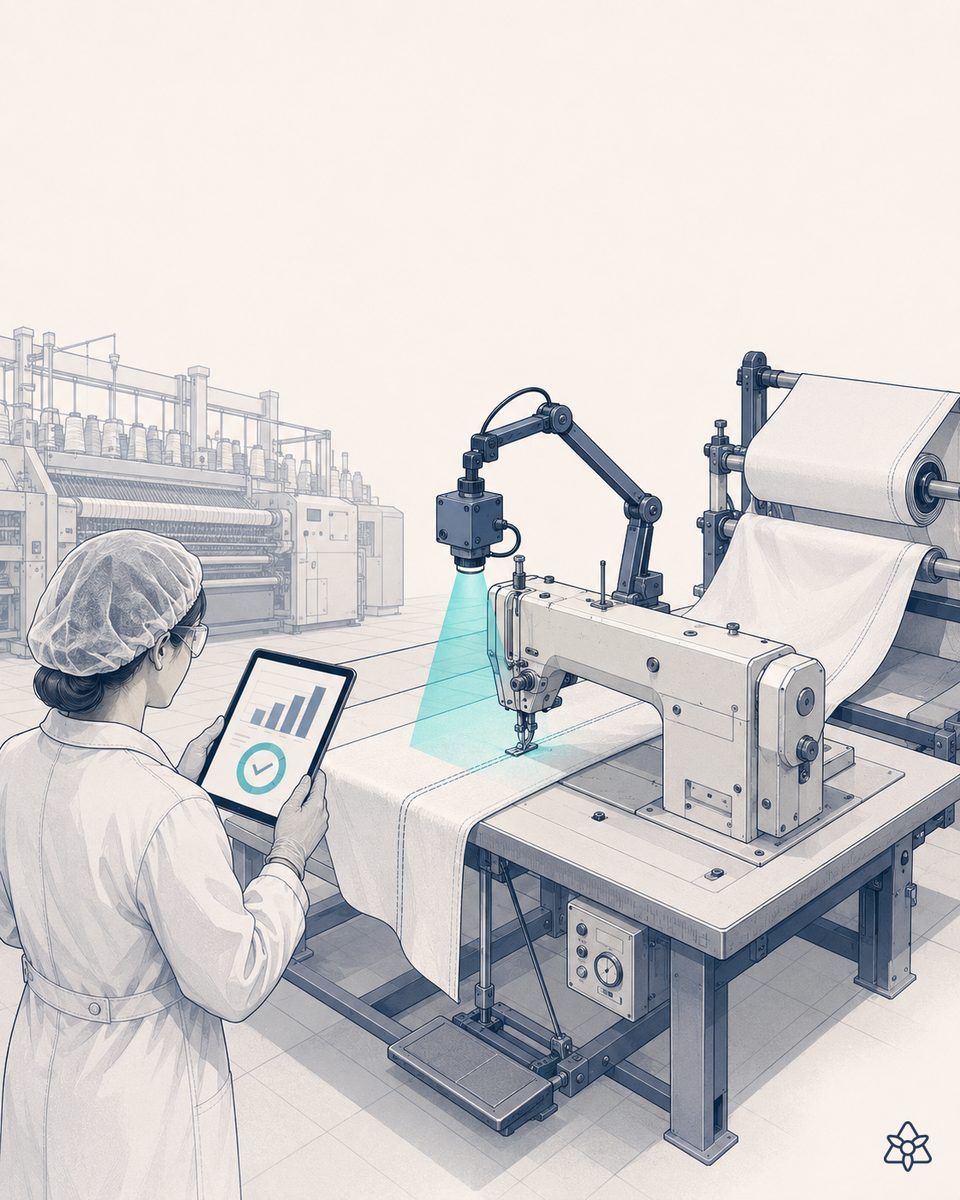
The OEKO-TEX file exists — just not before the audit.
In a spinning mill, dyehouse or garment plant working under OEKO-TEX Standard 100, the traceability of a certified SKU lives scattered: OEKO-TEX certificates from yarn and dye lot suppliers as PDFs in mismatched folders, laboratory test reports in the quality manager's inbox, technical data sheets for auxiliaries (softener, stain repellent, sizing) in a spreadsheet, dyehouse batch sheets in the MES, metal trim batches in the ERP. When the annual renewal or an update to the substance Annex comes around, someone puts the file together by hand the week before — and every error is a nonconformity.
The three realities almost nobody manages to cross-reference on the floor in time:
- What goes into this SKU in this batch — which yarn, which dye lot, which auxiliaries, which trim. Spread across five systems.
- What each supplier certifies — and from when until when it is valid. Spread across PDFs.
- What the OEKO-TEX Annex requires today — and what changed since the last audit. Spread across the Institute's bulletins.
The classic system (chaining it by hand the week before) works 99% of the time. The remaining 1% is the nonconformity the auditor finds that could have been spotted six months earlier — and the delayed renewal, with the loss of market access that comes with it.
iLEAN Writer does not replace the quality manager — it keeps the file permanently live for them.
The problem with the OEKO-TEX file is not a lack of knowledge: the quality manager knows exactly what to cross-reference. The problem is document volume and speed: keeping dozens or hundreds of certified SKUs up to date against suppliers, tests and bulletins. iLEAN acts as the putty between the five systems and the PDFs where traceability lives on islands, without asking you to change ERP, MES or laboratory.
Connect captures everything that comes in (certificates, tests, delivery notes, bulletins). Writer cross-references by SKU/batch and keeps the file live. The person signs every renewal — the AI does not.
The iLEAN pieces applied to the OEKO-TEX 100 file:
- iLEAN Writer (Agent) — a specialized agent from the iLEAN Agents family; it lives in Central and works 24/7. It maintains the SKU → batch → components → certificates → tests → Annex in force graph. When the audit arrives, the file already exists. When the Annex is updated, the agent identifies the affected SKUs and proposes the new tests to run.
- Connect — captures everything: suppliers' OEKO-TEX certificates (PDFs arriving by email), accredited laboratory test reports (PDFs), technical data sheets for dye lots and auxiliaries, dyehouse batch sheets from the MES, trim delivery notes, bulletins from the OEKO-TEX Institute. It all comes in and becomes cross-referenceable data.
- iLEAN Edge — optional, for when you need to capture a physical batch at the warehouse inbound with a QR or a supplier label the system had never seen. Local reading, asking nothing of the old MES.
OEKO-TEX file prepared by hand vs. a live file with iLEAN Writer
| Aspect | Manual pre-audit preparation | With iLEAN Writer |
|---|---|---|
| State of the file | Exists, chopped up across PDFs and spreadsheets | Live and unified in Central |
| Annual renewal | Weeks of office work | Generated on the spot, with signature |
| Annex update | Manual review, SKU by SKU | Agent identifies affected SKUs and proposes tests |
| Expired supplier certificate | Discovered during audit week | Early warning to the purchasing manager |
| Pending tests | Arranged with the laboratory at the last minute | Planned with room to spare, predictable budget |
| Traceability to SKU/batch | Rebuilt if the auditor asks for it | Permanent, with a photo of the original document |
Impact estimate for your plant — to be validated with your numbers.
The block below is an estimate to be validated with the specific data of your plant. We put it forward so the committee has an order of magnitude; we refine it during the diagnostic.
- Mid-sized textile plant with 30-200 SKUs certified to OEKO-TEX Standard 100, supplying fashion, home, sportswear or technical markets.
- Writer pilot (agent + Connect capturing suppliers and tests + human validation workflow). First value expected within a few weeks: the first OEKO-TEX file per SKU packaged on its own.
- Indicative payback between 4 and 9 months, depending on the number of certified SKUs, the labor hours currently spent preparing the annual audit and the documented frequency of Annex updates requiring additional tests.
- Reduction in annual audit preparation time in the order of ≥30% already in the pilot.
- The hard lever is twofold: recurring savings on pre-audit office work and a lower risk of nonconformity or delayed renewal, which hits the sales channel directly (customers who require the OEKO-TEX label in their specifications).
And the quality manager's reasonable doubt
“What if the agent makes up a test or links the wrong certificate?” — the agent only recontextualizes data that already exists. It extracts the limits from the PDF of the accredited laboratory's test report, associates the supplier certificate with the specific batch via the delivery note, adds up the dye lots per batch from the MES. It does not generate tests and it does not invent batches. Hallucination is a problem of free generation, not of anchored tasks: the best models brought the error below 1.5% on tasks anchored to the source [1]. And even so, the person signs every renewal — the AI does not.
[1] OpenAI paper “Why Language Models Hallucinate”, 2025 — on the reliability of AI in tasks anchored to the source.
What people ask about OEKO-TEX 100 traceability with AI
What does OEKO-TEX Standard 100 require regarding traceability of a textile article?
Proving that the article (yarn, fabric, garment, accessory) and all its components sit within the harmful substance limits of the product classes (I to IV), with accredited laboratory testing and supply chain traceability: yarn or fiber batch, dye lot, auxiliary products (sizing, softener, stain repellent), metal trims. Annual renewal forces you to keep the file live and the tests in date. If a substance is updated in the Annex, everything in stock or on the line is affected — and you have to prove it within hours, not weeks.
How does iLEAN Writer build the OEKO-TEX file without manual work in audit week?
iLEAN Writer is a specialized agent from the iLEAN Agents family that lives in Central and works 24/7 against everything Connect captures: OEKO-TEX certificates from yarn suppliers as PDFs, technical data sheets for dye lots and auxiliaries, laboratory test reports (PDFs), delivery notes from trim suppliers, dyehouse batch sheets, finishing records. The agent cross-references, orders and produces the file per batch/SKU. But it does not send it to the auditor: it leaves it on the desk of the quality/sustainability manager, who validates and signs. The AI writes the draft; the person puts their name to it.
What happens if a supplier's OEKO-TEX certificate has expired or is missing?
The agent catches it before the auditor does. When it builds the file for a batch and finds that the OEKO-TEX certificate for a yarn or a dye lot has expired or never reached the system, it flags it as an early nonconformity and alerts the quality manager and the purchasing manager — before production closes, not at the annual audit. It is the hot bed pattern: the shift comes in and finds everything already resolved, with no surprises at 6 pm the day before the OEKO-TEX auditor arrives.
And if the auditor finds a wrong data point? Did the AI make something up?
The agent only recontextualizes data that already exists — it extracts the substance limits from the PDF of the accredited laboratory's test report, associates the supplier certificate with the specific batch, adds up the dye lots and auxiliaries applied. It does not generate tests and it does not invent batches. Hallucination is a problem of free generation, not of anchored tasks: the best models brought the error below 1.5% on tasks anchored to the source. And even so, the manager signs — traceability from auditor back to the original document stays in the file.
How much does an agent-built OEKO-TEX 100 dossier cost in a spinning mill, dyehouse or garment plant?
The pilot covers supplier capture (Connect — OEKO-TEX certificates, laboratory tests, delivery notes), the Writer agent in Central, and a human validation workflow over the files per SKU/batch. First value expected within a few weeks: the first OEKO-TEX file packaged on its own. Indicative payback between 4 and 9 months, depending on the number of certified SKUs, the labor hours currently spent preparing the annual audit and your exposure to Annex updates. The hard lever is twofold: recurring savings on pre-audit office work and a lower risk of nonconformity. We ask for your plant's data and send back ROI in 48h.
More cases in other sectors
- GOTS organic cotton traceability — the TC that never arrived is the premium you lost.How iLEAN Tracer links farm, spinning and weaving with a GOTS chain of custody link by link, captures…
- An undetected yarn break is paid for in meters of scrap fabric — not on the quality report.How iLEAN Vision detects a yarn break on the industrial loom in real time, stops the shed and alerts the…
- Outdoor membrane lamination control with AI vision — the bubble the eye cannot see is found by the customer's first wash.iLEAN Vision detects delamination, bubbles and poorly bonded areas in the waterproof-breathable membrane…
- PU sole defect detection in safety footwear with AI — the bubble shows up at demolding, not at the customer.How iLEAN Vision detects bubbles, insole debonding and off-shade color in injected polyurethane soles…
- REACH SVHC in textile dyes and finishes — the dossier should not cost a technician a whole week.How iLEAN Writer builds the REACH/SVHC file per roll and per supplier (dyes, finishes), audit-ready,…
- The lab confirms your basis weight complies — four hours after it stopped complying.How iLEAN Edge controls spunbond nonwoven g/m² in line, roll by roll, with sensors and AI agents that…
Tell us your case and in 48h we'll send you the estimated ROI of this AI project for your OEKO-TEX 100 file.
We work on your plant's real data, not ours. Diagnostic with no commitment.
Request estimated ROI in 48h See other sectors