Multichannel cosmetovigilance: the adverse event reaches the safety officer — it doesn't die in an inbox.
Notice of a cosmetic adverse effect arrives by consumer email, distributor WhatsApp, web form or a call to customer service — almost never to the product safety officer. iLEAN Connect captures all four channels at second zero, classifies severity and affected batch and drops the ticket in the officer's inbox. The person signs the SUE report — Connect transports, it does not decide.
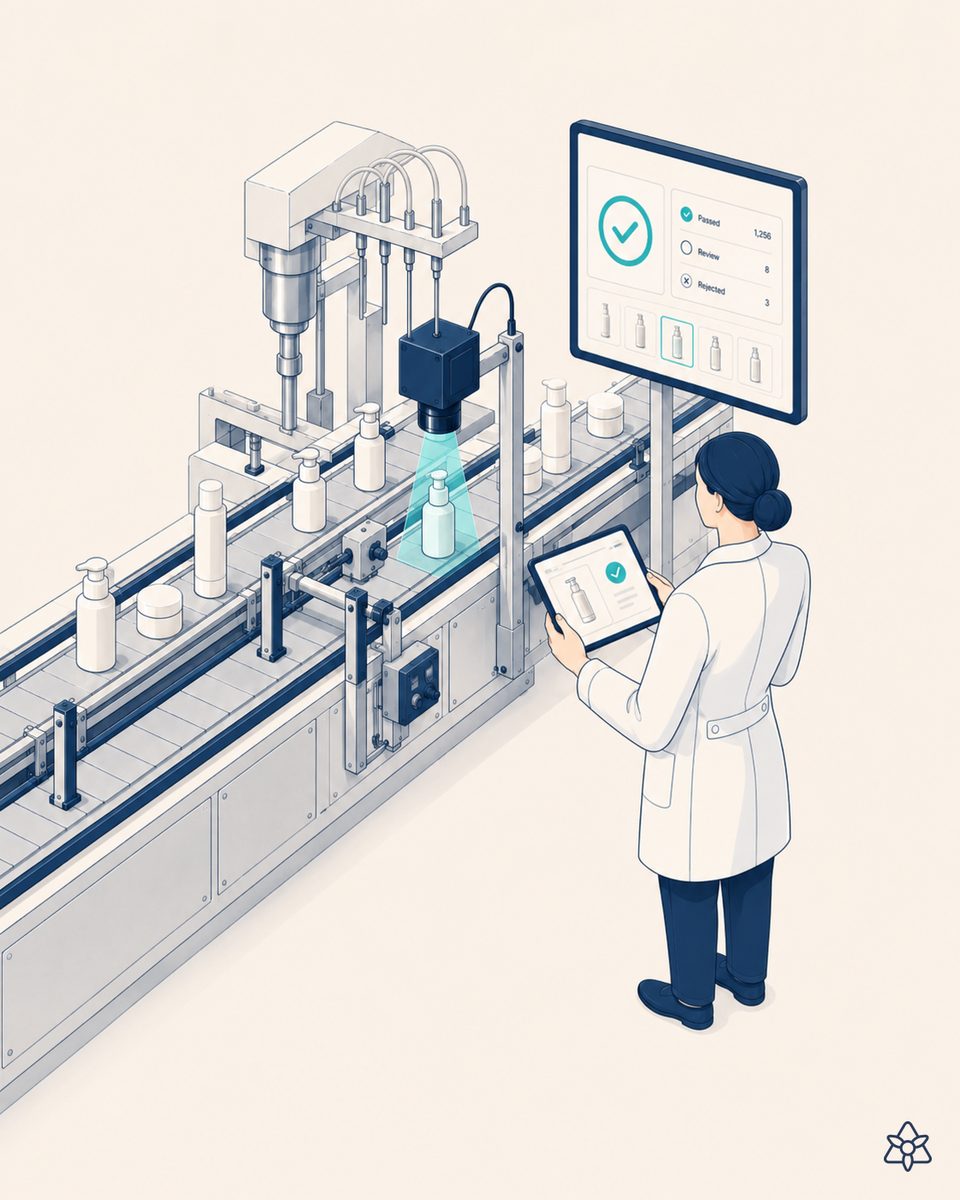
Four channels, four inboxes, and a clock that is already running.
When a consumer has a reaction to a cosmetic, they report it through whatever channel is at hand:
- Consumer email to the website's "contact" address — handled by customer service.
- Distributor WhatsApp to the sales rep — handled by the sales team.
- Web form to marketing — handled by marketing.
- Call to the customer care line — handled by the call center.
- Direct message on social media — handled by the community manager.
Each inbox has its own idea of urgency. The product safety officer sits at the end of a forwarding chain that was never designed to detect adverse events. The consumer's email is treated as a complaint; the distributor's WhatsApp is treated as a logistics gripe; the web form gets tagged as "feedback." The EU Regulation 1223/2009 clock started when the notice entered the company, not when it reached the officer. 99% of cases are not SUEs — and they are what hides the 1% that is.
iLEAN does not add yet another CRM — it seals the cracks between the channels you already have.
The cosmetovigilance problem is not a lack of information: it is information scattered across channels that do not talk to each other. iLEAN Connect acts as the putty that fills the gaps between customer service, sales, marketing and the community manager — without asking you to change your CRM, your helpdesk or your preferred WhatsApp Business channel.
Connect listens to every channel, classifies the ticket and drops the case in the safety officer's inbox at second zero. The sales rep keeps closing deals; the safety officer sees the case before it goes cold. Connect transports, the Agents propose, the person signs.
The specific piece:
- iLEAN Connect — captures email, WhatsApp, Telegram, web forms, transcribed calls and social media direct messages. Classifies intent (sales inquiry / logistics complaint / possible adverse event). Extracts product, batch, SKU, probable severity. Drops the case in the officer's inbox.
- iLEAN Agents — propose the draft reply to the consumer through their original channel (and in their language), and the draft SUE report for the authority if the responsible person confirms it. They cross-reference the batch's PIF to add the traceability.
- Three safety rings — the SUE / non-SUE classification and the report to the authority are always signed by the responsible person. What is critical is never decided alone.
Adverse event by forwarding vs. adverse event triaged at second zero
| Aspect | Classic multichannel customer service | With iLEAN Connect + Agents |
|---|---|---|
| Inbound channel | Email, WhatsApp, web, phone — each on its own | All four converge into a single triage |
| Time to reach the safety officer | Hours to days, depending on the forwarding chain | Second zero |
| Affected batch identification | The consumer mentions it or not | Automatic extraction + cross-check against the portfolio |
| Draft reply to the consumer | Static templates | Contextual draft in their channel and language |
| Draft SUE report | From scratch, every time | Pre-filled with the case and PIF information |
| Link to the batch's PIF | Manual or nonexistent | The case is linked to the PIF |
Impact estimate for your plant — to be validated with your numbers.
The block below is an estimate to be validated with the specific data of your operation. We put it forward so the committee has an order of magnitude; we refine it during the diagnostic.
- A brand with an active EU catalog and customer service split across email + WhatsApp + web form + phone support.
- Connect pilot on the two highest-volume channels (the low-hanging fruit). First value — the officer's inbox with the last 30 days triaged — within a few weeks.
- Indicative payback between 4 and 9 months, depending on ticket volume per month, historical SUE frequency and the cost of an authority observation for late notification.
- Expected reduction in time to detect a possible adverse event ≥ 30%. A defensible floor; the ceiling is refined with your channel Pareto.
And the safety officer's reasonable doubt
"What if the AI misclassifies a serious case as mild and we lose it?" — Connect does not classify SUE / non-SUE: it transports the case and proposes. AI reliability in tasks anchored to the source (reading a message and extracting product, batch, probable severity) is below 1.5% error in the best models [1]. The SUE decision and the report to the authority are always signed by the person — the three rings are there precisely for this. Connect transports, the Agents propose, the person signs.
[1] OpenAI paper “Why Language Models Hallucinate”, 2025 — on the reliability of AI in anchored tasks.
What people ask about multichannel cosmetovigilance
What does EU Regulation 1223/2009 require for cosmetic adverse effects?
The responsible person and the distributor are required to notify the competent authority of the member state of serious undesirable effects (SUE) without delay, under Article 23 of EU Regulation 1223/2009. The authority keeps a centralized register, and the information is shared between member states. The SUE report includes severity, affected batch, consumer details and a description of the effect. Compliance is not optional — and the clock starts when the notice enters the company, not when it reaches the safety officer.
Why don't adverse events reach the safety officer in time?
Because they come in through every channel except the right one: a consumer email to customer service, a distributor WhatsApp to the sales rep, a web form to marketing, a call to the customer care line, a social media message to the community manager. Each channel has its own inbox and its own idea of urgency, and the product safety officer sits at the end of a forwarding chain that takes days — or never ends. The classic setup works 99% of the time; that 1% is what escalates to a SUE.
How does iLEAN Connect capture channels as different as WhatsApp and email?
Connect is much more than an app — it listens outward across every channel: email, WhatsApp, Telegram, web forms, transcribed calls, social media direct messages. When a message comes in, it classifies it (is it a sales inquiry?, a logistics issue?, a possible cosmetic adverse event?), extracts batch, product and severity if they appear, and drops it in the safety officer's inbox at second zero. The sales rep keeps handling their own cases; the safety officer sees the case before it goes cold.
Does the AI decide whether a ticket is a serious adverse effect?
No. The SUE / non-SUE classification and the decision to notify the authority belong always to the product safety officer. What Connect does is triage: classify probable severity, flag the case as priority if clinical keywords appear, identify the batch and the SKU, and propose a draft reply to the consumer. The person validates, corrects and signs — Connect transports, the Agents propose, the person signs.
How does iLEAN prepare the report for the competent authority?
When the officer confirms a SUE, the Agents prepare the draft SUE report with the available information: consumer details, product, batch, description of the effect, timeline and immediate actions taken. The structure follows the authority's templates. The officer reviews and signs. And the whole case is linked to the affected batch's PIF, so the next CPSR review already has the traceability — the learning is not lost.
More cases in cosmetics
- ISO 8 cleanroom for cosmetic powder: see particles and PPE at second zero, not at the audit.How iLEAN Vision reads particles and PPE in real time in an ISO 8 compact-powder cleanroom — the quality…
- Foundation color matching with AI — today's N3 the same as tomorrow's N3, batch after batch.How iLEAN Vision verifies color batch by batch in foundation and multicultural makeup bases — no drift,…
- Multibrand cosmetic contract manufacturing — two competing brands on the same line, one traceability trail per customer.How iLEAN Tracer secures cross-customer traceability in a cosmetic contract manufacturing plant with…
- Eyeshadow and blush compaction with AI — the crack is born in the press and paid for by the customer on the shelf.How iLEAN Edge controls compaction press force on eyeshadows and blushes to prevent cracks, waste and…
- AI against premium perfume counterfeiting — the bottle that leaves the plant twice should never leave at all.How iLEAN Tracer serializes with GS1 DataMatrix and uses vision to verify the unique code on every…
- Industrial AI for hair color manufacturingTwelve real industrial AI cases in hair-color plants: paperless capture, in-line vision, auditable…
Tell us your case and in 48h we'll send you the estimated ROI of this AI project for your cosmetovigilance.
We work on your customer service's real data, not ours. Diagnostic with no commitment.
Request estimated ROI in 48h See cosmetics