Kanban across plants and countries — customs never notifies the MRP.
Kanban between plants in different countries demands real transit times and real customs behaviour, not a buffer set five years ago. iLEAN integrates them automatically: Connect captures transport notices through whatever channel they arrive on, the agent recalculates the lot sizes, and the planning manager sees it before the line feels the impact.
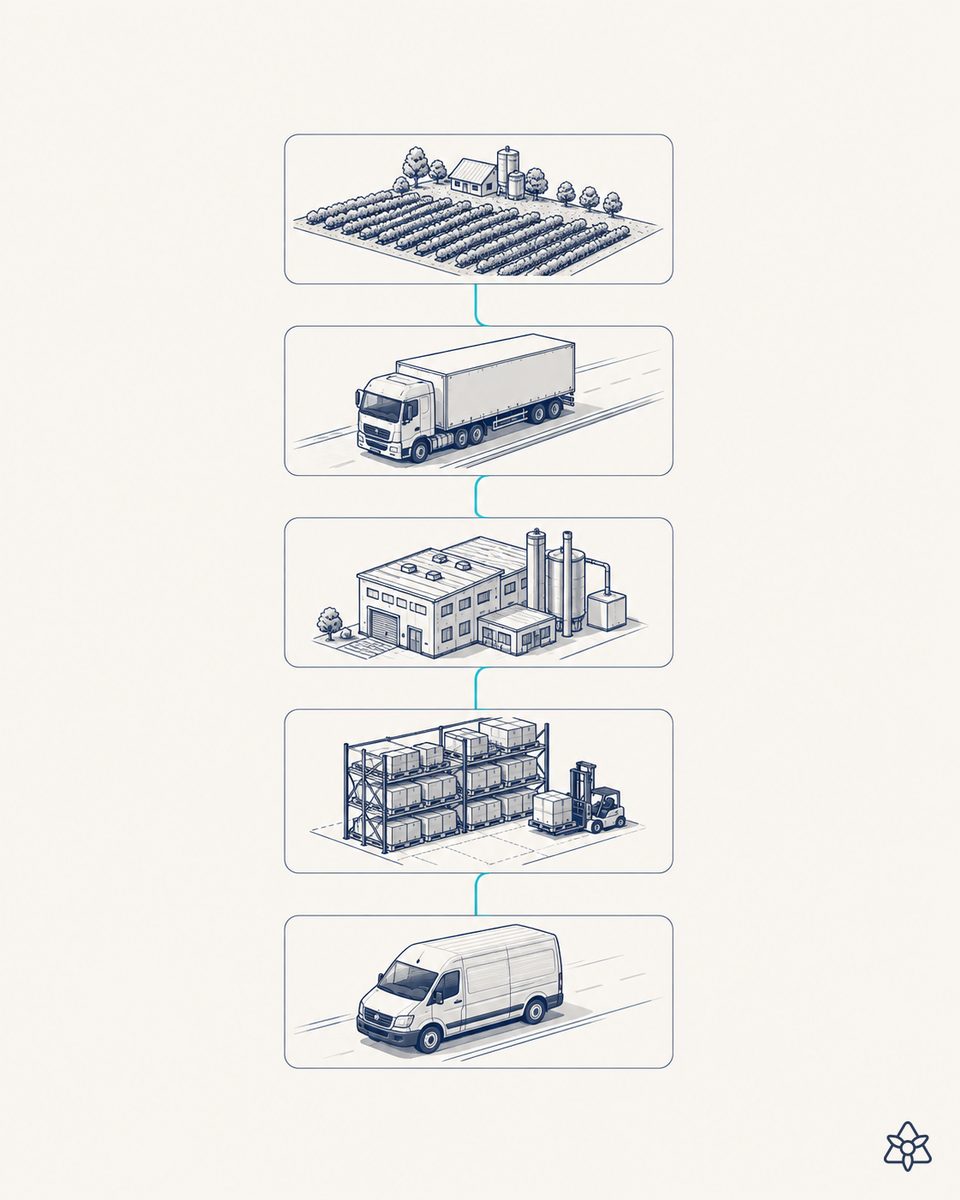
A kanban with a constant lead time, on a chain that no longer has one.
The planning manager of a group with plants in several countries knows kanban works — it is one of the best methods industry has produced. What no longer works is the assumption it was calculated on: that the lead time between the plant producing the component and the plant assembling it is stable and known.
- The real transit time is not in the MRP — it is in the freight forwarder's email, in the carrier's messaging app, on the customs portal, in the head of the logistics manager who calls every morning to ask.
- The safety buffer was set once and never touched — because touching it is frightening. The result: either stock piles up and ties down millions, or material is missing on exactly the day it matters.
- Plants don't talk to each other — each has its own ERP (sometimes three different ERPs inside the group), its own material codes, its own calendars. Coordination happens through weekly meetings and spreadsheets that age badly.
The paradox of multi-plant multi-country kanban: the cleanest method in Lean runs on the dirtiest data, because the good data sits outside the system.
iLEAN doesn't replace the MRP — it seals the cracks between planning, transport and customs.
The IRIS category (Industrial Reality Intelligence Systems) starts from one principle: capture reality first, produce the report afterwards. In cross-plant kanban that reality almost never arrives through a sensor — it arrives in a forwarder's email or a carrier's message. Connect captures that flow and turns it into data. iLEAN acts as filler between each plant's MRP/ERP and the outside world, without asking you to swap one ERP for another.
Connect captures transport notices wherever they land. The agent cross-checks them against each plant's plan and recalculates the kanban. The manager signs off — the system warns before the impact, not after.
The three iLEAN pieces applied to multi-plant multi-country kanban:
- Brain — collects each plant's data (real consumption, defect ratios, calendars) and keeps a unified view of the dynamic kanban. It is not a BI: it is a layer that updates reorder points per corridor as soon as the real lead time changes.
- Connect — reads the forwarder's emails, the carrier's messages, the customs portal, the transcribed call from the broker. And it captures from each plant's ERP/MRP through whichever door each one allows (API, ODBC, export). Bidirectional: it drafts the reply to the carrier on the same channel, and the person signs it off.
- Agent — cross-checks the delay notice with the destination plant's plan. If there is a risk of a stockout, it proposes redirecting from a sister plant, pulling the next kanban forward, or warning the line to reorganize the day. The planning manager approves; the agent executes only where explicit autonomy has been granted.
Classic cross-plant kanban vs. dynamic kanban with iLEAN
| Aspect | Classic cross-plant kanban | With iLEAN Brain + Connect + Agent |
|---|---|---|
| Lead time | Constant, set years ago | Variable, calculated from the corridor's real history |
| Customs notices | Forwarder email someone re-sends at 10 pm | Captured at second zero, agent recalculates the impact |
| Multi-ERP | Each plant on its island, coordination by weekly meeting | Connect reads every ERP, agent synchronizes catalogues |
| Safety stock | Constant buffer nobody dares to touch | Dynamic buffer per corridor, tuned to the real risk |
| Reaction to an event (strike, hold-up) | Crisis meeting the next day | Redirection proposal from the sister plant before the impact |
| Visibility for the line | The operator finds out when material is missing | The line sees the adjustment coming hours or days ahead |
Impact estimate for your plant — to be validated with your own numbers.
The block below is an estimate to be validated with your group's actual data. We put it forward so the committee has an order of magnitude; we refine it during the diagnostic.
- Industrial group with 3-5 plants in different countries, multi-ERP, and a plant-to-plant lead time crossing at least one customs border.
- Brain + Connect + Agent pilot on one critical corridor (the pair of plants with the highest flow or the most stockouts). First expected value in a few weeks: unified capture of transport notices alone removes the manual forwarding and gives day-by-day visibility.
- Reduction of cross-plant safety stock in the order of 15%-30% in the first year (estimate to be validated). Reduction of downtime caused by missing components, of a similar order.
- Indicative payback between 4 and 9 months. The hard lever is twofold: working capital released + line stoppages avoided at the destination plant.
And the operations director's reasonable doubt
“What if the agent redirects a kanban badly and leaves me without material in another plant?” — hallucination is a problem of free generation, not of anchored tasks. On tasks where the AI simply recontextualizes a piece of data (reading a delay notice and cross-checking it with the plan), the best models brought the error rate below 1.5% [1]. And even so, the agent proposes, the planning manager decides. The three safety rings let each corridor be configured with the level of autonomy the group defines, without touching code.
[1] OpenAI paper “Why Language Models Hallucinate”, 2025 — on the reliability of AI in anchored tasks. [2] Ocean freight variability data: ~1,500 USD per container up to >20,000 at the 2021 peak, a 2024 rebound driven by the Red Sea, then a fall from overcapacity.
What people ask about multi-plant multi-country kanban with AI
How is dynamic kanban calculated between plants in different countries?
Classic kanban (coverage lot × lead time × safety factor) assumes a stable lead time. Between plants in different countries that is fiction: the truck leaves, crosses a customs post, waits for an inspection, leaves again. iLEAN calculates kanban with a variable lead time: the agent cross-checks the real transport history, the delay notices that arrive by email or messaging from the carrier, the public holidays in the origin and destination countries and the customs pattern of the corridor. The result is a kanban that breathes with reality — higher when the corridor is tense, lower when it flows.
What about customs delays? How are they anticipated?
iLEAN Connect captures customs information through every channel that carries it: the freight forwarder's email, the carrier's messaging app, the customs portal screen, the transcribed call from the broker. Every event enters at second zero, with no forwarding and no meetings. The agent cross-checks that notice with the lot in transit, recalculates the impact on the destination plant and, if there is a risk of a stockout, proposes an action: pull the next kanban forward, redirect from a sister plant, or warn the line to reorganize the day's plan. The person decides; the agent does the reading and cross-checking — the part someone does today at 10 pm forwarding emails.
Does it work with multi-ERP (a different ERP in each plant)?
Yes — and it is the most common situation in groups that have grown by acquisition. iLEAN does not force you to homogenize the ERP: it acts as filler between them. Connect reads from each ERP through whichever door each one allows (API, ODBC, reading an export, or simply the daily email the ERP itself generates). The agent recontextualizes material codes across each plant's catalogue and keeps them synchronized with a mapping the team maintains from a spreadsheet, not from a six-month IT project. Integration is real work, but it is no longer an excuse not to do it.
Does it reduce total stock between plants?
An estimate to be validated: the reduction in safety stock between plants usually moves between 15% and 30% in the first quarters, not because the algorithm is better — the kanban formula is old and well known — but because for the first time it is being calculated with real customs and transport data, instead of with a constant buffer that was set five years ago and nobody dared to touch. The hard lever: working capital released + lower obsolescence risk in sister plants.
And the unpredictability of transport? Red Sea, overcapacity, strikes…
Ocean freight has been on a roller coaster for years: from around 1,500 USD per container to more than 20,000 at the 2021 peak, a rebound in 2024 driven by the Red Sea, then a sharp fall from overcapacity. The conclusion is not “transport is expensive today”, it is that long chains are fragile, and a kanban that does not incorporate that variability manufactures false confidence. iLEAN does not predict the future of the Red Sea: it reads the reality of your corridor every day and adjusts. When an event moves transit times, the agent warns before the impact reaches the line.
Tell us about your case and we'll send you the estimated ROI of a dynamic cross-plant kanban with AI in 48h.
We work on your corridors and your ERPs' real data, not on ours. Diagnostic with no commitment.
Request estimated ROI in 48h See Lean Manufacturing