REACH microplastics in cosmetic exfoliants — an out-of-place INCI is no longer a warning, it's a recall.
REACH restriction 2023/2055 on microplastics in rinse-off products and exfoliants requires proving, batch by batch, that no banned synthetic polymer enters the formula. iLEAN Tracer cross-checks the actual INCI of the lot, the current master formula and the supplier's certificate, and holds production before packing when something does not add up. The person signs.
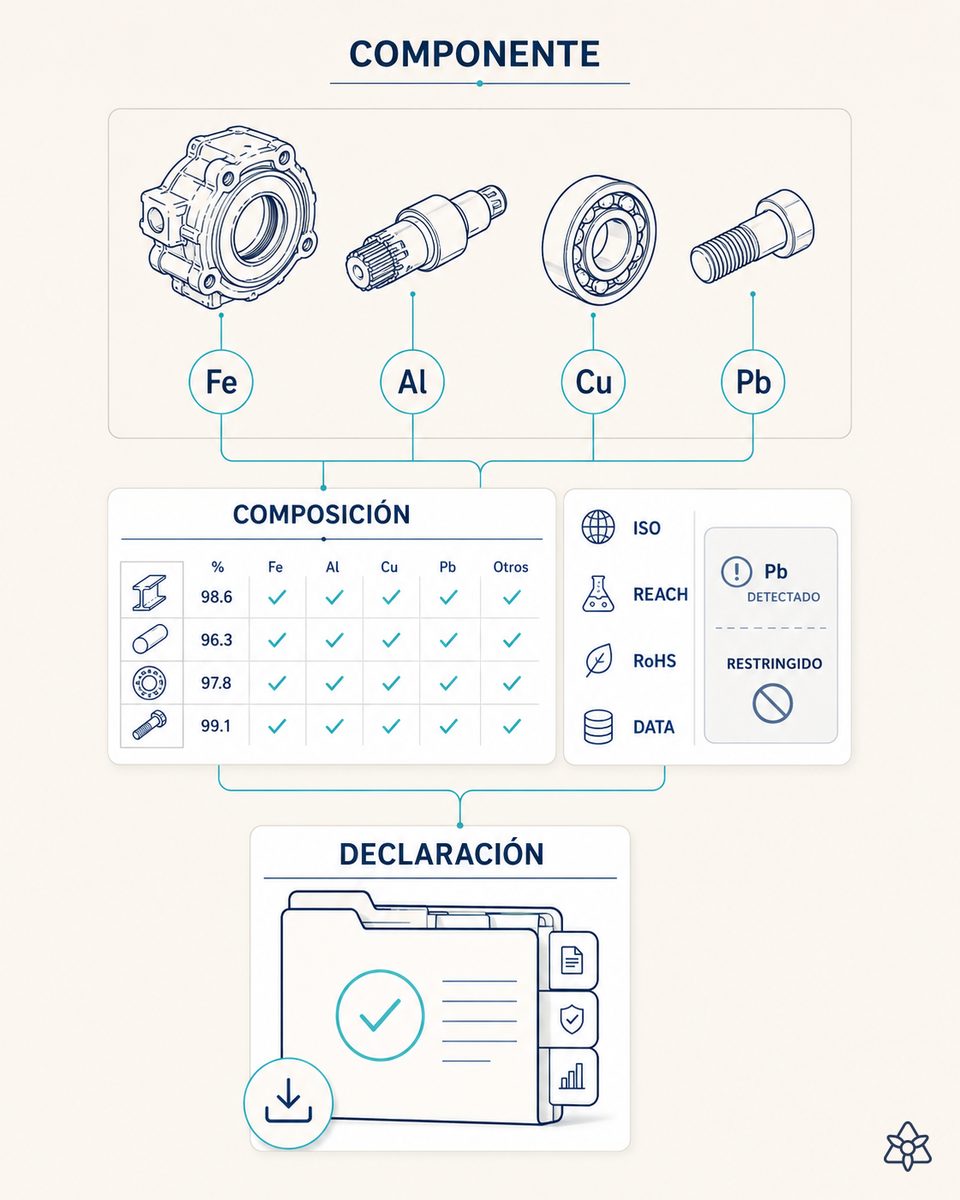
A rule with an easy face — just another INCI — and a cross-check almost nobody has solved.
The REACH microplastics restriction looks simple on paper: certain synthetic polymers can no longer go intentionally into rinse-off cosmetic formulas (exfoliating gels, liquid soaps with beads, rinse-off masks). On the plant floor, however, it demands cross-checking three realities that are almost never in the same system:
- The approved master formula — the current version of the product in the R&D system, with its INCIs and its technical exemptions.
- The actual INCI of the lot that came in through the warehouse — what the supplier shipped this time, certified in a PDF sitting in the purchasing inbox, not always aligned with the latest data sheet on the portal.
- The applicable REACH rule for the product type and supplier category, with its transitional periods for old stock.
The quality manager knows it — and the regulatory lead knows it even better. But the moment the cross-check breaks is precisely the least visible one: the supplier silently changes the polymer matrix of a lot, the new certificate lands in the wrong person's email, and packing keeps working with the old version of the INCI. Product that is no longer legal, signed off as if it were.
iLEAN Tracer does not add yet another system — it is the putty that seals the crack between R&D, purchasing and packing.
The REACH compliance problem is not a lack of information: it is information living on islands that, at the critical moment (a lot change, a formula version change, a supplier change), does not reach the person who signs in time. iLEAN acts as the putty that fills those gaps, without asking you to change the ERP, the LIMS or the R&D formula system.
Connect captures the supplier's certificate through whatever channel it arrives. An agent cross-checks the actual INCI against the current formula and the REACH rule. If something does not add up, Tracer holds the batch before packing. The person signs — never the other way around.
The iLEAN pieces applied to the microplastics restriction in rinse-off:
- Connect — captures the supplier's certificate whether it comes from the EDI portal, a PDF email, a WhatsApp from the sales rep or the purchasing manager's inbox. It digitizes it, extracts the declared INCIs, and drops it into the system at second zero — without anyone forwarding anything or calling a meeting.
- Tracer agent — cross-checks the actual INCI of the lot against the current master formula and the REACH rule applicable to the product type. If it detects a banned polymer or a new INCI that was not expected, it holds the batch before packing and alerts the regulatory lead through whatever channel they use.
- Per-batch file — Tracer leaves the audit dossier ready with the formula, the certificate, the rule and the human decision, all signed and traceable. When the inspector or the B2B customer with a questionnaire shows up, the quality manager rebuilds nothing by hand: open the batch and export.
Manual REACH compliance vs. cross-checked compliance with iLEAN Tracer
| Aspect | Manual + folders + email | With iLEAN Tracer |
|---|---|---|
| Supplier changes the polymer matrix | PDF in an inbox — depends on who opens it | Captured at second zero, cross-checked against the formula |
| Actual INCI per lot | Data sheet in a folder, not always the current one | Versioned and linked to the production order |
| Detecting a banned polymer | Whenever someone reviews the certificate by hand | Before packing, automatic, with the batch held |
| Old stock and transitional period | Hard to prove lot by lot | Manufacturing date and composition traceable per batch |
| File for the auditor / B2B questionnaire | Manual reconstruction, weeks | Per-batch dossier, automatic, with human signature |
| Master formula version change | Notice by email, risk of an old version on the floor | Current version verified on every order |
Impact estimate for your plant — to be validated with your numbers.
The block below is an estimate to be validated with the specific data of your plant. We put it forward so the committee has an order of magnitude; we refine it during the diagnostic.
- Mid-sized cosmetics plant with a rinse-off catalog (exfoliating gel, liquid soap, rinse-off mask), a supplier portfolio with frequent lot changes.
- Tracer pilot on the formula → lot → packing chain, with Connect connectors against the purchasing ERP and the supplier portal. First value expected within a few weeks: the first per-batch dossier already exportable.
- Indicative payback between 4 and 9 months, depending on how often lots change and the current average cost of a B2B questionnaire / manual audit.
- The hard lever is a single REACH penalty avoided or a single recall for undeclared microplastics: product pulled from the shelf, brand damage, potential fines. That pays for the entire pilot — with plenty left over for the expansion.
And the regulatory lead's reasonable doubt
“What if the AI misreads an INCI and lets a banned polymer through?” — hallucination is a problem of free generation, not of anchored tasks. In tasks where the AI merely recontextualizes a data point from one system to another (extracting INCIs from a PDF, cross-checking them against the ERP formula), the best models brought the error below 1.5% [1]. And even so, what is critical is never decided alone: Tracer holds the batch and the person signs. The three safety rings are there precisely for this — the critical operation is only ever executed by a person, by design.
[1] OpenAI paper “Why Language Models Hallucinate”, 2025 — on the reliability of AI in anchored tasks.
What people ask about REACH microplastics in rinse-off cosmetics
What exactly does EU Regulation 2023/2055 ban regarding microplastics in cosmetics?
EU Regulation 2023/2055, Annex XVII of REACH, bans intentionally added synthetic microplastics in cosmetic products. It applies staggered deadlines by category: rinse-off with exfoliating microbeads (the most visible, first deadline), leave-on, makeup products, glitter perfumes, and so on. The restriction covers insoluble solid particles <5 mm of synthetic polymers, with narrowly defined technical exemptions. What the plant has to verify is that no banned INCI (polyethylene, PET, nylon-12, PMMA, styrene copolymers and the like) enters a formula that can no longer carry it.
How do you prove to the auditor that a rinse-off batch contains no banned microplastics?
Each batch's file must be able to reconstruct the cross-check: approved master formula + actual INCI of the raw material in that lot + supplier certificate + the REACH rule applicable to the product type and the date. Today that lives in different places: the purchasing ERP, the supplier's data sheet as a PDF in a folder, the formula in the R&D system. iLEAN Tracer cross-checks those islands per batch, leaves the dossier prepared and holds the batch before packing when the actual INCI does not match the current version of the formula.
What happens to old stock of gel exfoliant with microbeads?
REACH restrictions usually provide transitional periods for product manufactured before the application date, but they require being able to prove the manufacturing date and the actual composition of each lot. A plant that cannot reproducibly demonstrate what a specific batch contained and when it was made cannot claim the transitional period. Batch-to-batch traceability stops being a quality nice-to-have and becomes your evidence before the authority.
Why isn't the raw-material supplier's certificate enough?
The supplier's certificate is necessary, but on its own it is not enough: the typical problem is that the certificate sits as a PDF in the purchasing inbox while packing works with the formula in force in its own system. If the supplier silently changes a polymer matrix in a lot and the change never reaches packing, the plant packs with the old version of the INCI and unknowingly signs false traceability. iLEAN Connect captures the change whether it comes by email, EDI or the supplier's web portal, and puts it in front of the person who signs the order.
How much does per-batch REACH traceability cost in a mid-sized cosmetics plant?
The order of magnitude of a Tracer pilot in a mid-sized cosmetics plant covers integration with the ERP/MES, the connectors to the supplier portal and the master-formula bucket, plus an annual license. The reasonable payback to present to the committee is several months — the hard lever is a single REACH penalty avoided or a single recall for undeclared microplastics, which pays for the entire pilot. We ask for your plant's data and send you the estimated ROI in 48h, with your numbers.
More cases in industrial compliance
- ISO 22716 — cosmetic GMP is proven with records, not intentions.How iLEAN turns multibatch production records into audit-ready ISO 22716 evidence.
- Multibatch ISO 22716 GMP records with AI — digitize the dossier without throwing away the paper or changing the ERP.How iLEAN Connect digitizes multibatch ISO 22716 GMP records in cosmetics without throwing away the…
- REACH — the restriction arrives before your next formulation.How iLEAN identifies in minutes which formulas, batches and customers are affected by a new REACH…
- CPNP — the portal that decides whether your cosmetic can be sold in the EU.How iLEAN keeps the CPNP file aligned with what actually leaves the cosmetic packing line.
- EU CPNP cosmetic notification: the dossier is no longer weeks of copying data between spreadsheets.How iLEAN Writer drafts the EU CPNP notification dossier by cross-checking INCI, allergens and safety…
Tell us your case and in 48h we'll send you the estimated ROI of this AI project for your cosmetics plant.
We work on your plant's real data, not ours. Diagnostic with no commitment.
Request estimated ROI in 48h See compliance