Multibatch ISO 22716 GMP records with AI — digitize the dossier without throwing away the paper or changing the ERP.
ISO 22716 requires complete, traceable records per batch in cosmetics — but switching to a vertical MES is expensive, slow and breaks the way the plant works. iLEAN Connect captures the paper, the shift lead's spreadsheet and the old panel wherever they are, builds the batch file during the operation and leaves the dossier audit-ready in minutes. The quality manager signs the closure. The plant does not change how it works.
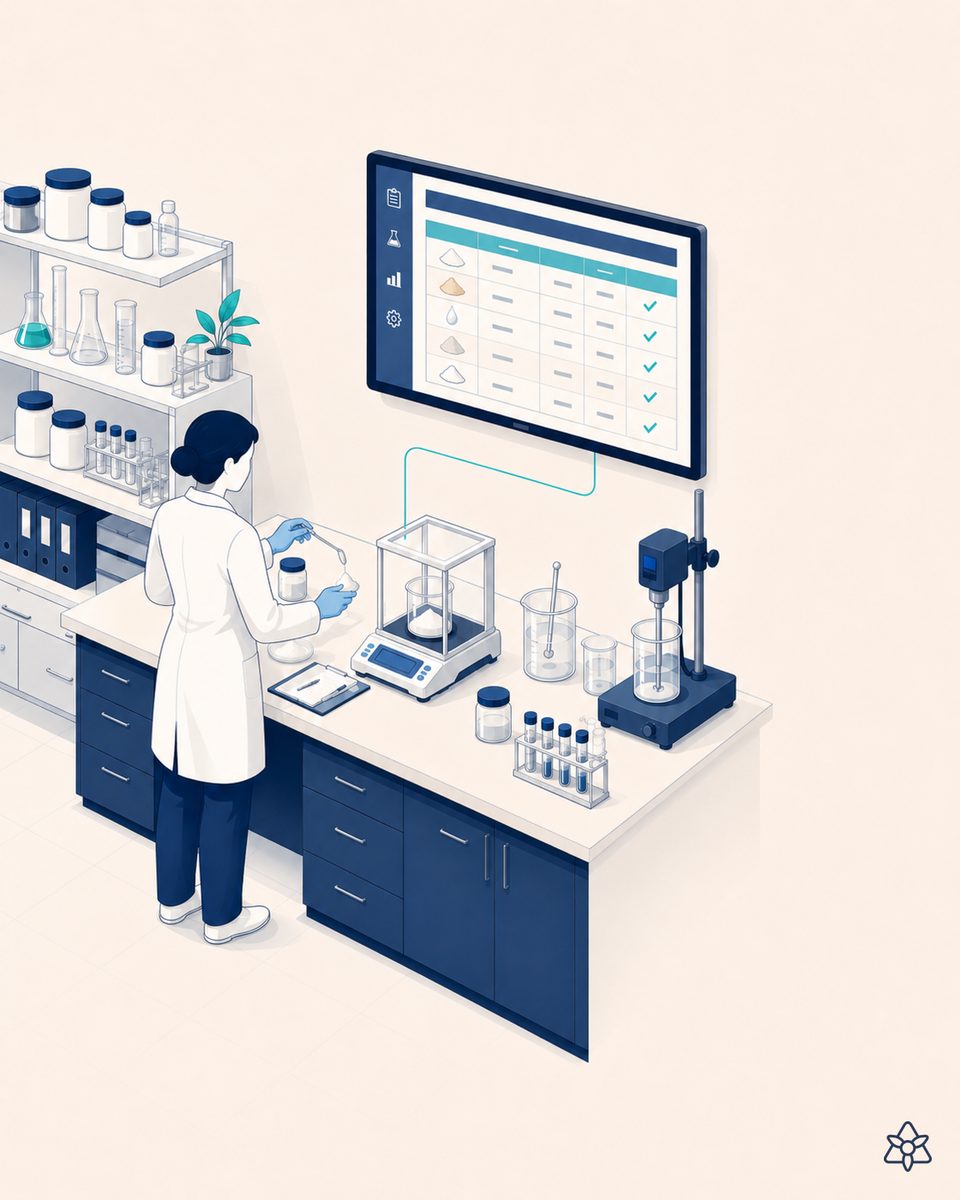
The records are done right — it's rebuilding the batch that kills you.
A cosmetics plant that earned its ISO 22716 certification many years ago does not have a record-quality problem — the operator writes it down, the shift lead closes the batch, the lab files the control. The problem shows up at three moments:
- When an external audit walks in (ISO 22716, health authority, a global retailer like Sephora or Watsons) and asks you to rebuild the file of several batches within a few days: someone has to fetch the physical logbook, scan it, cross it with the shift lead's spreadsheet and with the paper cleaning log. Weeks of a quality team busy filing instead of producing.
- When a complaint arrives and you need to see what happened in that specific batch: the trail exists, but it is scattered across three folders, two spreadsheets and a logbook taken home by the shift lead who just retired.
- When the veteran's knowledge walks out with him. The fine-grained decisions he made on each batch (why he raised the temperature half a degree in reactor 3, why he extended the mixing time) live in his head and in a notebook, not in the system. The day he retires, half the plant goes with him.
The consultant's classic way out (moving everything to a vertical cosmetics MES) costs six or seven figures and forces the plant to change how it records. During the months of transition, record quality gets worse, floor resistance runs high, and the ROI fades away. It does not have to be that way.
iLEAN Connect is the putty that digitizes GMP without throwing away the paper.
The GMP record problem in small and mid-sized cosmetics plants is not what gets recorded — that part is already fine — it is where it lives and how it gets rebuilt. Three islands: the plant logbook, the shift lead's spreadsheet, the old machine panel. iLEAN acts as the putty that fills the gaps between those islands, without asking you to change the machine, the ERP or the way the plant works.
Connect reads the logbook from a photo, the spreadsheet wherever it lives, the old panel even if it is isolated. The agents cross-reference, index by batch and build the dossier. The quality manager signs the batch closure — the paper stays in the filing cabinet if you want it, and the digital trail builds itself.
The specific piece for this pain:
- iLEAN Connect — the piece that fills the dead zones between ERP, paper and panel. Graduated capture adapted to each source: (1) manual — the operator or the shift lead photographs the logbook or the analog panel when closing the record, and Connect transcribes and indexes it by batch; (2) intermediate — if the machine has a local computer, however old and isolated, Connect connects and extracts without changing the machine; (3) integrated — if there is a modern interface, direct integration. Plus outward capture: the supplier's CoA that arrived by email, the incident note the customer sent over WhatsApp — everything lands in the batch file at second zero.
- iLEAN Agents — a swarm of agents in Central that cross-reference what Connect captures with the production order in the ERP, the lab control and raw-material traceability. They build the batch file during the operation: by the time the auditor arrives, the dossier already exists. And they keep the supporting documentation (procedures, GMP work instructions, staff training) versioned — which ISO 22716 also requires.
- The three rings guarantee that the human signature is mandatory at batch closure and that records travel cryptographically signed. What is critical is never decided alone.
Paper + spreadsheets + vertical MES vs. iLEAN Connect on top of what you already have
| Aspect | Classic model (paper + spreadsheets) or vertical MES | With iLEAN Connect + Agents |
|---|---|---|
| Tool change for the operator | Paper stays, or a new MES that breaks the flow | None — Connect captures where the operator already records |
| Rebuilding the batch file | Weeks, with the quality team tied up | Minutes — built during the operation |
| Capturing the shift lead's spreadsheet | Lives in a forgotten shared folder | Connect reads it wherever it is and indexes it to the batch |
| Analog panel on an old machine | Nobody records it digitally | Operator photo or a read from the isolated PLC |
| The veteran shift lead's knowledge | Leaves with him when he retires | Captured as voice notes / indexed notes |
| Project cost and timeline | Vertical MES: six-seven figures, 12-24 months | Connect pilot: first value in weeks |
Impact estimate for your plant — to be validated with your numbers.
The block below is an estimate to be validated with the specific data of your plant. We put it forward so management and the quality manager have an order of magnitude; we refine it during the diagnostic.
- Mid-sized cosmetics plant with several reactors and parallel packing lines, a mix of modern and old machines, records split across paper + spreadsheets + ERP.
- Connect pilot on 1-2 reactors and the packing line most critical for your main retailer: capture of the logbook and the old panel, connection to the ERP, batch file construction. First value expected within a few weeks — from the first captured batch.
- Indicative payback between 4 and 9 months, depending on the annual time your quality team spends rebuilding files for audits/complaints and that team's labor cost.
- Defensible floor for reducing per-batch file rebuild time: ≥ 30%. The hard lever is not just labor cost — it is passing the audit without surprises and keeping the global retailer as a customer.
And the quality manager's reasonable doubt
“What if the AI transcribes the logbook wrong and the record ends up with an error?” — hallucination is a problem of free generation, not of anchored tasks. In tasks where the AI merely recontextualizes a data point from one format to another (reading the photo of the logbook and pouring it into a structured record), the best models brought the error below 1.5% [1]. And even so, what is critical is never decided alone: Connect proposes the transcribed record next to the original photo, and the quality manager signs the batch closure. The three safety rings exist precisely for this.
[1] OpenAI paper “Why Language Models Hallucinate”, 2025 — on the reliability of AI in anchored tasks.
What people ask about digitizing ISO 22716 records in cosmetics
What does ISO 22716 require for multibatch production records?
ISO 22716 (Good Manufacturing Practices for cosmetic products) requires complete, traceable records per batch: production order, raw materials with their batch and CoA, process parameters (temperature, agitation, times), in-process controls, intermediate cleaning, the person responsible for each operation, and finished-product control results. Every batch has to be reconstructable from its records — and in a multibatch plant with multiple reactors and parallel lines, records mean hundreds of documents a day, today mostly on paper or in local spreadsheets.
Why does classic GMP digitization (moving everything to a vertical MES) tend to fail in small and mid-sized cosmetics plants?
Because a vertical cosmetics MES is expensive, slow to deploy and forces the plant to change how it works. The operation has been recording properly with paper and spreadsheets for decades — the problem is not record reliability, it is how fast you can rebuild the batch when the auditor calls or a complaint arrives. Changing the operator's tool triggers resistance, new errors and worse record quality for months. iLEAN Connect goes the opposite way: it captures the paper and the spreadsheets where they are, without asking the operation to change anything.
How does iLEAN Connect capture a handwritten record or an analog panel?
Three paths, depending on the machine or the document. Manual: the operator photographs the plant logbook or the analog panel with a phone or tablet at the end of the record; Connect transcribes and indexes by batch. Intermediate: if the machine has a local computer, however old and isolated, Connect connects and extracts the data without changing the machine. Integrated: if it has a modern interface, direct integration. The operator never changes tools — Connect adapts to the plant, not the other way around.
What about the electronic signature and the auditable record ISO 22716 asks for?
Every capture is timestamped, attributed to a person (the phone or tablet identifies the operator) and cryptographically signed as it passes between the safety rings. The quality manager signs the batch closure from their interface — the operator does not sign every single field, which would be counterproductive for the plant's flow. The batch file builds itself during the operation; at closure, the manager reviews and signs. The auditable dossier is ready in minutes, not weeks.
Does this affect a customer validation or a retailer audit (Sephora, Sephora US, Boots, Watsons)?
Cosmetics retailer audits (including Sephora, Watsons, Boots or regional chains) usually go beyond strict ISO 22716 — they ask for granular traceability, visual evidence of the process, and a dossier per SKU. iLEAN Connect leaves the dossier built with the panel photo, the capture of the manager's spreadsheet, the between-batch cleaning log, all cross-referenced and signed. What used to be weeks of reconstruction becomes a folder ready to hand over. The plant keeps working as it always has — what changes is that the trail builds itself.
More cases in industrial compliance
- CPNP — the portal that decides whether your cosmetic can be sold in the EU.How iLEAN keeps the CPNP file aligned with what actually leaves the cosmetic packing line.
- EU CPNP cosmetic notification: the dossier is no longer weeks of copying data between spreadsheets.How iLEAN Writer drafts the EU CPNP notification dossier by cross-checking INCI, allergens and safety…
- ISO 22716 — cosmetic GMP is proven with records, not intentions.How iLEAN turns multibatch production records into audit-ready ISO 22716 evidence.
- REACH — the restriction arrives before your next formulation.How iLEAN identifies in minutes which formulas, batches and customers are affected by a new REACH…
- REACH microplastics in cosmetic exfoliants — an out-of-place INCI is no longer a warning, it's a recall.How iLEAN cross-checks per-batch INCI, supplier lots and REACH restriction 2023/2055 so no cosmetic…
Tell us your case and in 48h we'll send you the estimated ROI of this AI project for your GMP compliance.
We work on your plant's real data, not ours. Diagnostic with no commitment.
Request estimated ROI in 48h See compliance