Receiving titanium and ceramics with one photo
Titanium and aluminum bars for horns arrive, along with piezo ceramics and electronic components for the generators. Each delivery carries a delivery note, a material certificate and lot labels. The receiving lead logs into the ERP to enter heat number, lot and quantity line by line. Either the driver waits, or it is rushed and heat-to-horn traceability breaks. With iLEAN Connect they photograph the delivery note, certificate and labels. iLEAN reads barcode, QR or plain text, extracts supplier, heat, lot and quantity, and shows a summary on screen.
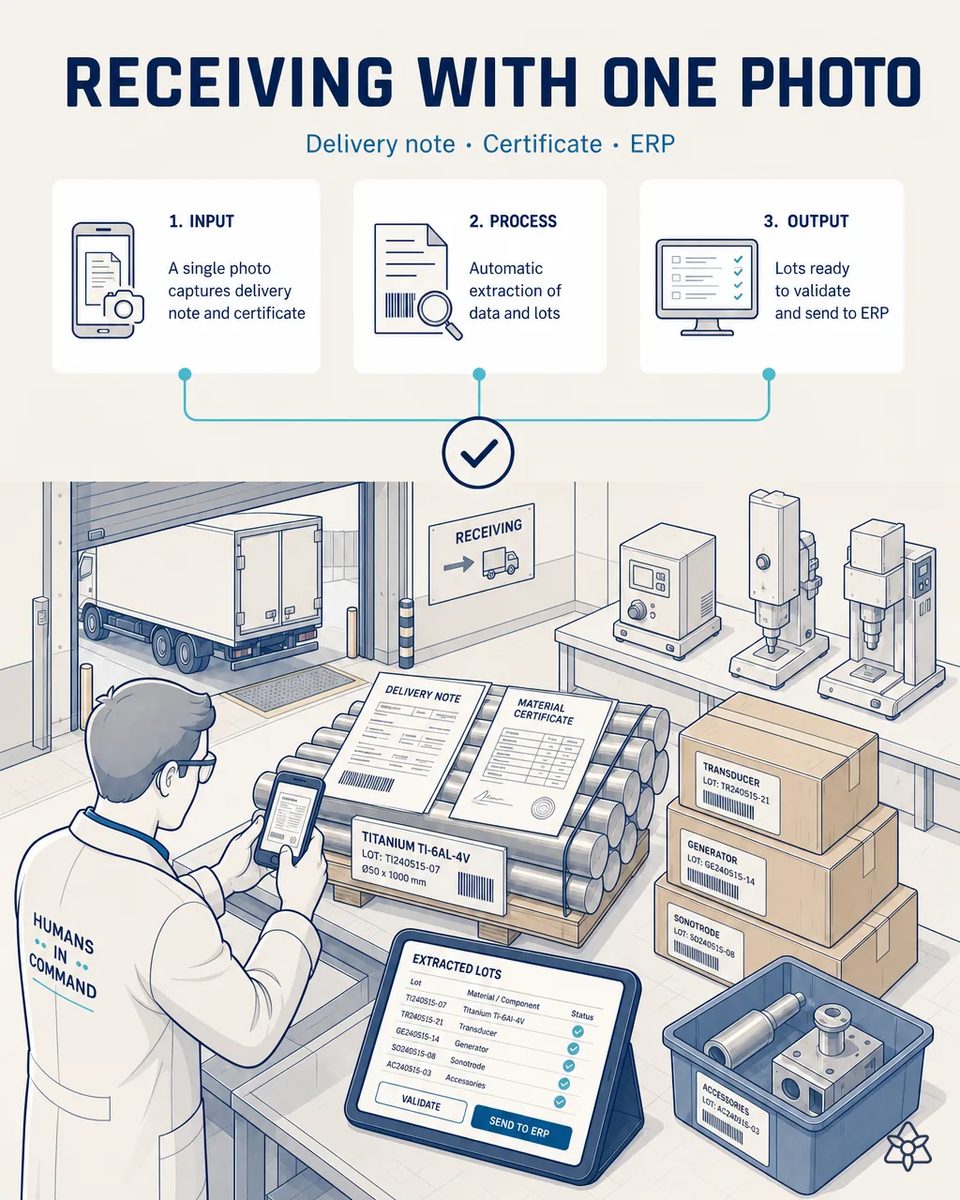
Heat-to-horn traceability breaks at the receiving dock.
Titanium and aluminum bars for horns arrive, along with piezo ceramics and electronic components for the generators. Each delivery carries a delivery note, a material certificate and lot labels. The receiving lead logs into the ERP to enter heat number, lot and quantity line by line. Either the driver waits, or it is rushed and heat-to-horn traceability breaks.
- Titanium and aluminum bars for horns arrive with a mill certificate and heat number; piezo ceramics and generator electronics arrive by lot, with their own labels.
- The receiving lead logs into the ERP and types supplier, heat, lot and quantity line by line. A mixed delivery, bars plus ceramics plus boards for the generators, can take forty-five minutes.
- Either the driver waits, or it gets rushed and the heat number is not tied to the bar, so the link between a horn and its material breaks at the first step.
- When a horn cracks in the field and the customer asks which heat it came from, that link is what quality needs and does not have, and the containment ends up covering every horn cut that quarter instead of one bar.
Connect in photo mode at receiving — certificate, note and labels in one capture.
With iLEAN Connect they photograph the delivery note, certificate and labels. iLEAN reads barcode, QR or plain text, extracts supplier, heat, lot and quantity, and shows a summary on screen. The receiving module usually needs two or three active licenses. With Connect, the lead validates with one tap without entering the ERP: a typical fifty to seventy percent cut in receiving and warehouse licenses.
The receiving lead photographs what is already on the pallet: delivery note, certificate and labels. iLEAN reads barcode, QR or plain text, and the lead validates the summary in one tap without opening the ERP. Traceability starts with the bar, not with the horn, and the driver leaves in minutes instead of waiting for the keyboard.
Receiving typed line by line versus receiving by photo
| Aspect | Today | With iLEAN Connect |
|---|---|---|
| Mixed titanium and ceramics delivery | About 45 minutes keyed | About 5 minutes with one photo |
| Heat number on the titanium bar | Typed, or skipped when rushed | Read from the mill certificate |
| Piezo ceramics lot | On a label in the box | Recorded against the lot |
| Heat-to-horn traceability | Breaks when receiving is rushed | Starts at the dock |
| Receiving and warehouse seats in the ERP | Two or three active | 50 to 70% fewer |
| The material certificate | In a binder | Stored with the lot |
Before: 45-minute unloading keyed line by line. After: 5 minutes with one photo; -50 to -70% receiving licenses.
Impact estimate — to be validated with your numbers.
The block below is an estimate to be validated against your plant's actual data. We put it forward so the committee has an order of magnitude; we refine it during the assessment.
- Estimated payback 3-8 months, plus recurring license savings that depend on how your ERP vendor prices receiving seats.
- Unloading from forty-five minutes to five, with full traceability by photo and the driver back on the road while the lot is already in the system.
- A typical 50 to 70% cut in receiving and warehouse licenses: the lead validates with one tap without entering the ERP.
- And heat-to-horn traceability that holds when a customer or an auditor asks where the titanium of a cracked horn came from.
Payback 3-8 months · ERP receiving licenses -50 to -70% (estimate to be validated). Unloading from forty-five minutes to five, full traceability by photo. Estimated payback of three to eight months plus recurring license savings; an estimate to be validated.
And the fair question from the production manager
“Mill certificates are all different, can it really read them?” — the layout varies between mills, but what is extracted, supplier, heat, alloy, lot and quantity, is always the same set of fields, which makes it an anchored task where the best models drop below 1.5% error [1]. On top of that, the heat number is cross-checked against the label on the bar, and any mismatch is flagged for the receiving lead before validation. The certificate image is kept with the lot for the customer's auditor.
[1] OpenAI paper "Why Language Models Hallucinate", 2025 — on the reliability of AI in anchored tasks.
What people ask about receiving titanium and ceramics by photo
Can it read mill certificates from different titanium suppliers?
Yes. It looks for the same fields on each certificate, heat, alloy, dimensions and quantity, wherever they sit on the page. A new supplier's format is learned from a few examples. Certificates in other languages are handled the same way, because the fields are the same.
Does it handle barcodes and QR codes on ceramics and electronics boxes?
Yes. It reads barcode, QR or plain text on the same photo and falls back to the printed text when a code is damaged or covered by tape. Mixed pallets with several lots are split into one line per lot on the summary.
How does the heat number follow the bar to the horn?
The lot is created with its heat on receiving, and the horn's work order consumes that lot. From then on, any horn can be traced back to its certificate in one query. When the bar is cut into several horn blanks, each blank inherits the heat.
Do we still need someone in the ERP at receiving?
Only for exceptions. The routine booking is validated on the tablet with one tap, which is where the cut in receiving licenses comes from. Returns, partial deliveries and rejected lots still go through whoever handles them today.
What if the delivery note and the certificate disagree?
The mismatch is shown to the receiving lead before validation, for example a quantity or a heat that does not match. Nothing is booked until a person resolves it, and the photo of both documents stays with the decision.
Tell us how long it takes you to book in a delivery of titanium bars.
We work on your plant's real data, not ours. Assessment with no commitment.
Request estimated ROI within 48h ‹ See all cases of ultrasonic welding equipment See metal fabrication and capital equipment